Underneath its skin, this sporty electric subcompact SUV is the product of automotive synergy, sharing its platform, batteries, and motor with its Renault-Nissan-Mitsubishi Alliance partner—specifically, the freshly rebooted third-generation Nissan Leaf. However, don’t dismiss this as a simple, lazy badge-engineering job. Mitsubishi has wrapped this affordable electric crossover in a sharply styled, aggressive suit of armor that looks distinctly, unapologetically Triple Diamond.
Scheduled to hit North American showrooms in the second half of this year, the Eclipse Sportback is a massive step forward for Mitsubishi’s “Momentum 2030” product offensive. Here is how Mitsubishi took the core of a Nissan Leaf and turned it into an entirely different visual beast.
Visual Transformation: Aggressive Lines Over Softer Curves
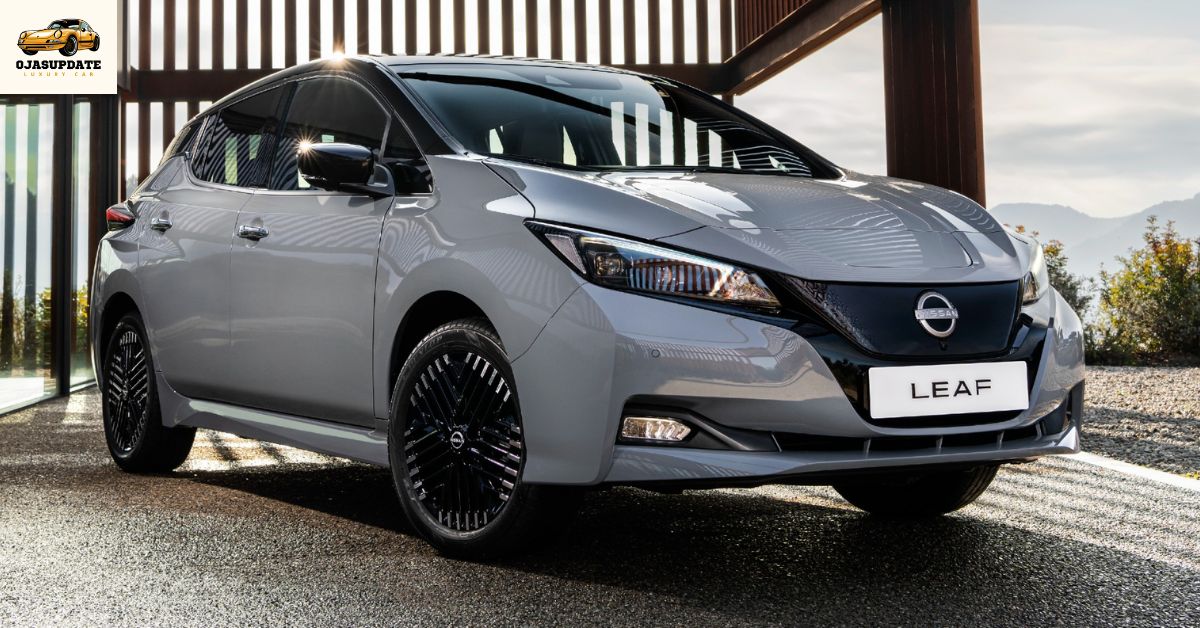
While the newly redesigned third-generation Nissan Leaf adopted a sleek, aerodynamic, fastback-style coupe silhouette, Mitsubishi’s design team wanted something far more chiseled and dominant. The two cars share identical fastback proportions, flush front door handles, and window silhouettes, but the front and rear fascias tell a completely different story.
1. A Chiseled Front Fascia
The Nissan Leaf features a smoother, softer nose to maximize aerodynamic slip. Mitsubishi, on the other hand, swapped it out for a much more muscular bumper characterized by deep, horizontal air intakes and sharp aerodynamic detailing. The signature 7-shaped LED daytime running lights remain, but Mitsubishi has omitted the glossy black trim strip that connects the headlights on the Nissan, giving the Eclipse Sportback a wider, more independent face.
2. A Hard-Edged, Sculpted Tail
At the rear, the design divergence is even more pronounced. Mitsubishi dropped the Leaf’s massive glossy black tailgate insert, replacing it with a clean, color-matched sculpted tailgate. The Eclipse Sportback features its own custom, sharp-edged rear bumper and unique internal LED taillight graphics that echo the rugged design language found across Mitsubishi’s global SUV portfolio. Tied together with striking, brand-specific three-spoke 18-inch aero wheel covers, it looks less like an economy commuter and more like a high-tech sportback.
Under the Skin: Proven CMF-EV Architecture
Because the Eclipse Sportback rides on the advanced CMF-EV architecture shared with the Leaf and the larger Nissan Ariya, buyers get the peace of mind that comes with billions of miles of real-world EV development.
While technical specifications for the Mitsubishi variant are being finalized ahead of its late-summer launch, its mechanical twin gives us an exact roadmap of what to expect under the floorboards:
- The Powertrain Options: The entry-level variant is expected to pack a 52-kWh battery pack paired with a single electric motor generating $174 \text{ hp}$ and $254 \text{ lb-ft}$ of torque.
- The Long-Range Spec: The flagship model will step up to a beefier 75-kWh battery pack, pumping output to 214 horsepower and $261 \text{ lb-ft}$ of torque.
- Range and Charging: The larger battery setup is projected to deliver an impressive, EPA-estimated 303 miles of range on a single charge. Furthermore, thanks to standard North American Charging Standard (NACS) integration, Eclipse Sportback owners will gain direct, plug-and-play access to over 27,500 Tesla Superchargers right out of the box.
Step Inside the Tech Sanctuary
While official interior images are being held under wraps until closer to launch, the cabin layout will closely mimic the space-efficient design of the Leaf.
Expect a modern, two-row cabin that comfortably seats five, boasting a flat front floor layout and a space-saving, dashboard-mounted gear selector. Higher-tier trims are slated to feature expansive dual 14.3-inch widescreen displays with Google built-in, wireless smartphone connectivity, a massive dimming panoramic glass roof, and up to a highly practical $55.5 \text{ cubic feet}$ of cargo room when the rear seats are folded flat.
The Verdict: Smart Alliance Strategy
In an era where developing an electric vehicle platform from scratch costs billions of dollars, leveraging the strengths of the Alliance is the smartest move Mitsubishi could make. By marrying Nissan’s reliable, long-range EV running gear with their own distinctive, aggressive design language, Mitsubishi has created an incredibly competitive, stylish subcompact EV.
With prices expected to mirror the Leaf—starting near the $30,000 mark and topping out under $40,000—the 2027 Mitsubishi Eclipse Sportback EV is proof that practical, everyday electric mobility doesn’t have to look boring.
About the Author