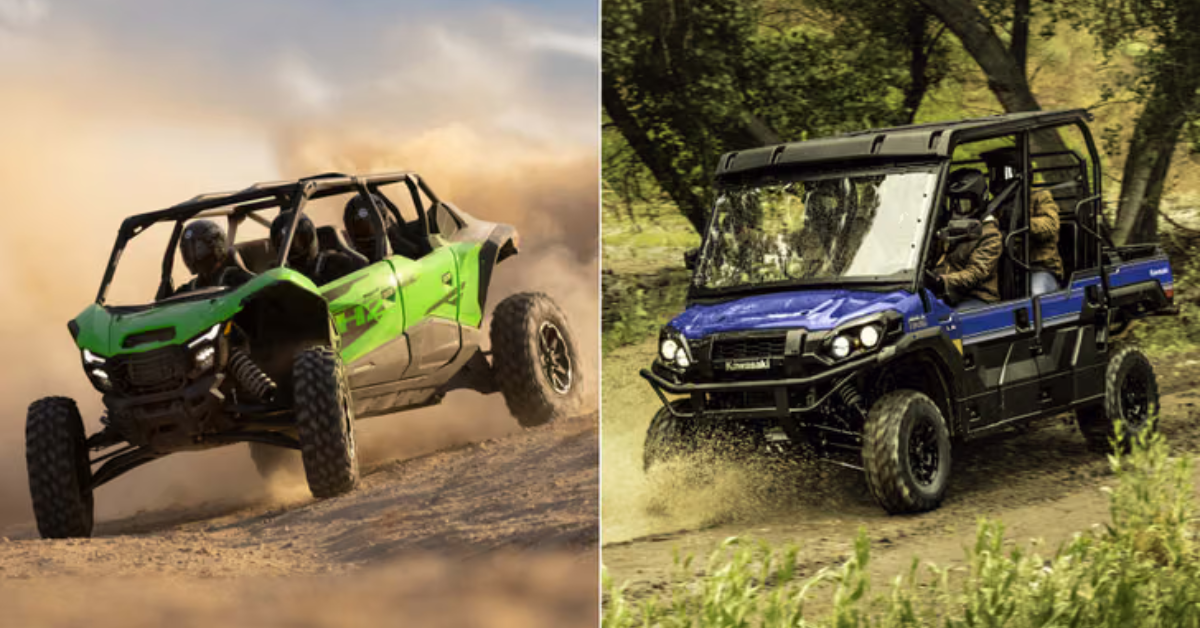
Kawasaki has made a bold and highly unusual move in the Indian market by launching its side-by-side range with prices starting from Rs 38 lakh. This is not a regular motorcycle launch, nor is it a typical automotive update aimed at mainstream SUV or bike buyers. Instead, Kawasaki has opened the door to a completely different kind of premium off-road mobility product—one that combines the thrill of motorsport, the practicality of an all-terrain utility machine and the exclusivity of a niche lifestyle vehicle.
For most Indian enthusiasts, side-by-side vehicles are still a rare sight. They are far more common in international markets where they are used for trail riding, desert driving, ranch work, adventure tourism and competitive off-road events. But with Kawasaki now officially bringing its side-by-side lineup to India, the conversation changes. These machines are no longer something Indian buyers only see in international videos, motorsport clips or imported off-road events. They are now part of Kawasaki India’s official premium portfolio.
The biggest question, of course, is simple: why is this launch such a big deal? The answer lies in what side-by-side vehicles represent. They are not built for urban commuting, traffic filtering or everyday family transport. They are designed for rugged terrain, adventure experiences, utility work in challenging environments and a level of off-road capability that regular SUVs and bikes simply cannot match. That instantly makes Kawasaki’s side-by-side range one of the most interesting and unconventional launches we have seen in India’s enthusiast mobility space.
In this blog, we take a detailed look at what Kawasaki’s side-by-side range launch means, who these vehicles are meant for, what buyers can expect in terms of design, performance and features, why the starting price of Rs 38 lakh makes strategic sense, and whether these machines could create a new premium off-road niche in India.
What Exactly Is a Side-by-Side Vehicle?
Before looking at the India launch in detail, it is important to understand what a side-by-side vehicle actually is. A side-by-side, often abbreviated as SxS or UTV in some markets, is an off-road machine designed with a seating layout where the driver and passenger sit next to each other—hence the name. Unlike a traditional ATV where the rider sits astride like on a quad bike, a side-by-side has a more car-like seating position with a steering wheel, pedals and often a roll cage for protection.
These vehicles are typically built for serious off-road use and can serve multiple roles:
- Adventure and trail riding
- Farm and estate work
- Mountain, desert and forest mobility
- Adventure tourism operations
- Motorsport and recreational off-road driving
- Utility support in difficult terrain
This is what makes them so unique. They blend the compact agility of an ATV with the control layout and seating comfort of a small off-road buggy. In the case of Kawasaki’s range, the focus is expected to be on premium, performance-oriented and ruggedly engineered machines that can handle serious terrain while also delivering a strong lifestyle appeal.
Why Kawasaki Launching This Range in India Matters
Kawasaki has long been known in India for its premium motorcycles—everything from sportbikes and adventure tourers to retro machines and middleweight performance models. But the launch of a side-by-side range takes the brand into a very different space.
This matters for several reasons:
1. It Expands Kawasaki Beyond Two-Wheelers
The side-by-side range gives Kawasaki a more diversified premium off-road identity. Instead of being seen only as a superbike and motorcycle brand, Kawasaki can now position itself as a wider powersports company in India.
2. It Creates a New Conversation Around Recreational Off-Roading
India does have an off-road enthusiast community, but the market is still relatively niche and fragmented. An official launch by a global brand like Kawasaki adds legitimacy and visibility to this space.
3. It Targets Luxury Lifestyle Buyers, Not Mass-Market Customers
At a starting price of Rs 38 lakh, these machines are clearly not aimed at casual buyers. They target a premium audience—people who buy for passion, utility in specific environments or the experience of owning something rare and capable.
The Rs 38 Lakh Starting Price: Why It Makes Sense
At first glance, Rs 38 lakh sounds like an enormous amount for an off-road machine that is neither a conventional SUV nor a luxury car. But pricing has to be understood in the context of what Kawasaki is selling.
These side-by-side vehicles are not commuter products. They are specialized machines with:
- Dedicated off-road chassis engineering
- Long-travel suspension
- High ground clearance
- Heavy-duty tyres and rugged bodywork
- Strong engines tuned for off-road conditions
- Advanced driveline hardware for rough terrain
- A niche imported-product positioning
In that context, the price begins to make more sense. Kawasaki is not trying to create a budget recreational toy. It is bringing in premium, purpose-built off-road vehicles that are likely to appeal to resort owners, motorsport enthusiasts, estate operators, adventure businesses and ultra-premium hobby buyers.
What Models Could Be Part of Kawasaki’s Side-by-Side Lineup?
While the exact India lineup will define how the range is positioned, Kawasaki globally is known for side-by-side models that span different roles—some focused more on recreation and performance, others on utility and work-oriented usage.
Broadly, side-by-side vehicles can be grouped into three categories, and Kawasaki’s India range could reflect one or more of these themes:
1. Recreation-Focused Performance Side-by-Sides
These are the most exciting from an enthusiast perspective. They are designed for fast trail riding, dunes, rocky paths and adventure terrain where speed, suspension travel and driver engagement matter. They often have aggressive styling, bucket seats, powerful engines and a more dramatic overall personality.
For buyers who want the “motorsport toy” side of the side-by-side experience, these are the machines that stand out the most.
2. Utility-Oriented Side-by-Sides
These versions focus more on work capability. They may include cargo beds, durable interiors, practical attachments and a setup aimed at farms, resorts, industrial sites or rugged property use. In international markets, utility side-by-sides are extremely popular because they can go where a pickup or conventional SUV struggles, while still carrying tools, supplies or support equipment.
In India, this category could attract premium agricultural estates, hospitality properties, private landowners and adventure camps.
3. Lifestyle Adventure Machines
Some side-by-sides sit somewhere in the middle—capable enough for real off-roading but also premium enough to be bought for recreational family use, weekend exploration or luxury outdoor experiences. These could be especially relevant in India if the target audience includes resort operators or buyers in hill, forest or desert regions.
Design and Build: Rugged by Purpose, Premium by Positioning
One of the most striking things about side-by-side vehicles is that they look completely different from normal cars or bikes. Their design is dictated by function, and that gives them a raw, purposeful visual appeal.
Key design characteristics buyers can expect:
- Exposed or semi-exposed off-road body structure
- Roll cage for occupant protection
- Wide stance for better stability
- Chunky off-road tyres
- High ground clearance
- Aggressive front-end styling
- Minimal overhangs for better approach and departure angles
- Cabin-style seating with steering wheel and side-by-side layout
The overall look is more like a race-bred utility buggy than a road vehicle. And that is exactly the point. Kawasaki’s side-by-side range is expected to deliver a tough, adventure-ready appearance that immediately communicates capability.
Engine and Performance: Built for Terrain, Not Just Straight-Line Speed
The performance conversation around a side-by-side is very different from that of a motorcycle or sports car. Here, the goal is not simply top speed. Instead, the engine and drivetrain need to deliver:
- Strong low-end and mid-range pulling power
- Smooth control over rough terrain
- Good response on climbs, loose surfaces and uneven tracks
- Reliable cooling and durability under stress
- The ability to carry passengers and cargo without struggling
Depending on the model, Kawasaki’s side-by-side range could offer strong petrol engines with off-road-focused tuning. These vehicles are usually paired with driveline systems designed to handle mud, rocks, sand and broken terrain rather than polished highways.
What matters most in a side-by-side powertrain:
- Usable torque
- Throttle precision
- Terrain adaptability
- Durability and heat management
- Ease of crawling and climbing in low-speed off-road conditions
That is why even if the raw power numbers do not sound like a superbike, the real-world performance of these machines can feel extremely impressive in their intended environment.
Off-Road Hardware Is the Real Highlight
The biggest reason to buy a side-by-side is not the badge, the exclusivity or even the engine alone. It is the hardware. These vehicles are purpose-built for off-road use in a way that even many premium SUVs are not.
Expected off-road highlights include:
- Long-travel suspension for rough terrain absorption
- High ground clearance
- Differential and traction-oriented hardware depending on model
- Strong ladder-style or dedicated off-road frame construction
- Terrain-capable tyres and wheel setup
- Underbody protection and rugged mechanical packaging
- Durable cabin and switchgear suited to dirty, wet or dusty conditions
This is the kind of engineering that allows a side-by-side to go far beyond the comfort zone of a road-biased SUV. Whether the terrain is rocky, sandy, muddy or deeply uneven, the SxS format is designed to stay composed and capable.
Who Will Actually Buy Kawasaki’s Side-by-Side Range in India?
This is perhaps the most important question, because the answer explains why the launch is significant even if sales volumes remain low.
1. Adventure Resort and Tourism Operators
Luxury resorts, safari properties and outdoor adventure businesses could use these vehicles for guest experiences, trail tours or internal mobility across large rugged properties.
2. Estate and Property Owners
Owners of large private estates, plantations, hill properties or rugged land could use side-by-sides as both practical utility machines and recreational vehicles.
3. Motorsport and Off-Road Enthusiasts
For a small but passionate audience, Kawasaki’s side-by-side range could be the ultimate off-road toy—something bought purely for the thrill of driving in the dirt, dunes or private off-road courses.
4. Premium Utility Buyers
Industrial sites, large private campuses or specialized work environments may also find side-by-sides useful where regular vehicles are either too bulky or not terrain-capable enough.
Will These Be Road Legal?
One of the key practical questions around side-by-side vehicles in India is how and where they can be used. These machines are fundamentally off-road products, so buyers will need to view them primarily as special-purpose or recreational machines, not replacements for regular road-going SUVs. Their strongest use case will likely remain private land, off-road parks, resorts, farms, trails and controlled environments rather than everyday city roads.
That is an important distinction because the value of a side-by-side lies in the experience and capability it offers away from tarmac—not in urban practicality.
Why This Launch Could Open a New Niche in India
Kawasaki’s side-by-side launch is unlikely to create a mass-market trend overnight, but it does something more important: it legitimizes the premium off-road recreational space in India. When a major global manufacturer officially introduces such machines here, it sends a signal that the Indian enthusiast market is mature enough to support more than just motorcycles and luxury SUVs.
Over time, that could encourage:
- More premium powersports products in India
- Greater interest in off-road parks and recreational trails
- Growth in luxury adventure tourism experiences
- Broader awareness of side-by-side vehicles as a category
Even if volumes remain niche, the brand-building value of this move could be substantial.
Final Verdict
The launch of Kawasaki’s side-by-side range in India from Rs 38 lakh is one of the most unusual and exciting premium off-road developments in recent times. These are not everyday vehicles and they are not meant to be. They are specialized machines built for adventure, rugged terrain, outdoor utility and lifestyle-driven off-road experiences that conventional motorcycles or SUVs simply cannot replicate in the same way.
At first glance, the price may seem extreme, but the side-by-side category operates by very different rules. Buyers are paying for capability, engineering, rarity and a completely different ownership experience. Whether used for luxury resort operations, estate mobility, hardcore recreation or enthusiast off-road fun, these machines bring something genuinely fresh to India’s powersports landscape.
About the Author