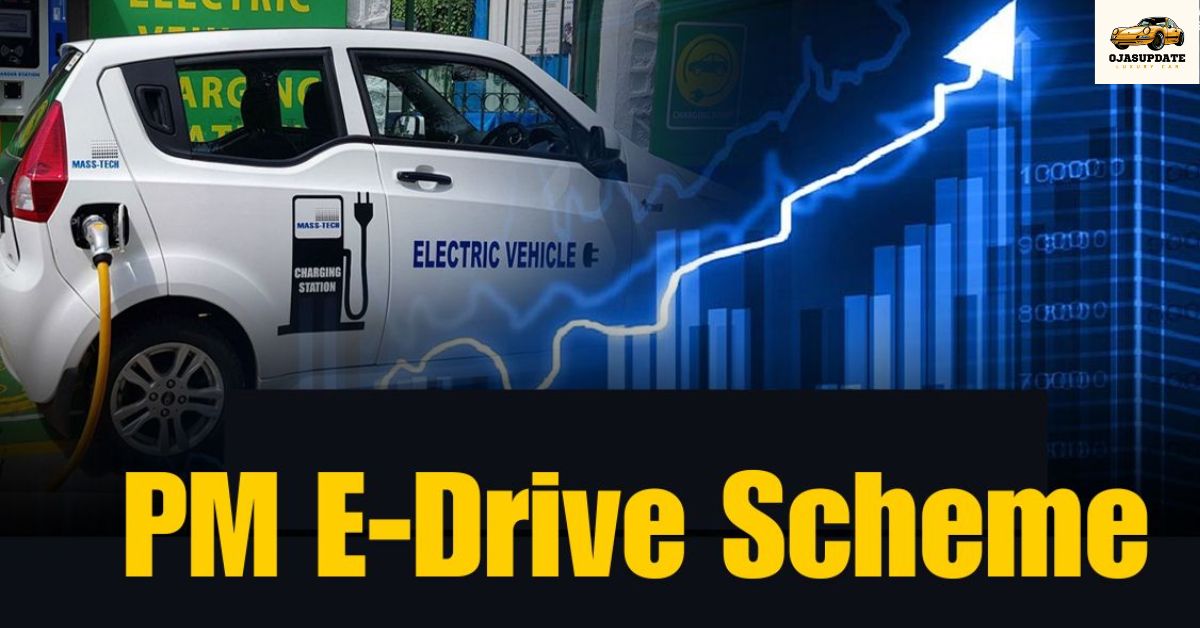
India’s journey toward a greener, quieter, and more sustainable future has been picking up significant speed. At the heart of this transition is the PM Electric Drive Revolution in Innovative Vehicle Enhancement (PM e-DRIVE) Scheme. Originally set with a two-year timeline ending in March 2026, recent updates from May 2026 suggest the Government of India is leaning toward a strategic extension.
With reports indicating that specific segments like electric two-wheelers (e-2Ws) have already been pushed to July 2026, and electric three-wheelers (e-3Ws) as far as March 2028, the move signals a clear intent: the “Electric Revolution” isn’t just a phase; it’s the new standard.
Why the Extension Matters
The PM e-DRIVE scheme was launched with a massive ₹10,900 crore outlay to replace the older FAME and EMPS frameworks. While the initial push was successful, the government recognized that reaching 100% penetration in a price-sensitive market like India requires a “marathon” mindset rather than a “sprint.”
1. Utilizing the War Chest
As of early 2026, data showed that while the demand for e-scooters was sky-high, certain allocations—such as those for e-trucks, e-ambulances, and public charging infrastructure—remained under-utilized. Extending the scheme allows the Ministry of Heavy Industries (MHI) to rechannel these funds, ensuring that every rupee contributes to decarbonizing the transport sector.
2. Preventing “Price Shock”
One of the primary reasons for the extension is to manage the total cost of ownership (TCO) for the average citizen. Abruptly ending subsidies can cause a sudden spike in vehicle prices, potentially scaring away first-time buyers. A phased extension allows manufacturers to further localize parts and reduce costs naturally, ensuring that when the subsidies finally fade, the market is ready to stand on its own feet.
What Changes for the Consumer?
If you’re planning to buy an EV in mid-2026, this extension is great news. Here is what the revised timeline looks like for various categories:
| Vehicle Category | Revised Terminal Date | Status |
| Electric 2-Wheelers | July 31, 2026 | Active Support |
| Electric 3-Wheelers (L5) | Closed Dec 2025 | Market Mature |
| E-Rickshaws & E-Carts | March 31, 2028 | Long-term Support |
| E-Buses & E-Trucks | Ongoing | Focus on Fleet Adoption |
The “Aadhaar” Advantage
The 2026 guidelines have streamlined the process for buyers. By linking your Aadhaar card and undergoing a simple e-KYC process, an e-voucher is generated instantly. This amount is deducted directly from the invoice of your vehicle at the dealership, making the “subsidy” feel like an instant discount rather than a long-winded reimbursement.
Beyond Subsidies: The Infrastructure Push
The potential extension isn’t just about making bikes cheaper; it’s about making them usable. A significant chunk of the PM e-DRIVE budget—roughly ₹2,000 crore—is earmarked for public charging infrastructure.
By extending the scheme, the government is giving state agencies and private charge-point operators (CPOs) more time to set up stations along national highways and high-traffic urban corridors. In fact, just this week, agencies like TGREDCO in Telangana extended their deadlines for setting up EV charging stations, proving that the infrastructure side is finally catching up to the vehicle sales.
The Phased Manufacturing Programme (PMP)
The government is also using this extension to tighten the Phased Manufacturing Programme. To qualify for the e-DRIVE incentives in 2026, manufacturers must prove they are using advanced chemistry batteries (like Lithium-ion) and sourcing a significant percentage of components locally.
This “Make in India” focus ensures that the scheme doesn’t just benefit foreign importers but actually builds a robust domestic supply chain, creating thousands of jobs in the process.
Final Thoughts: A Greener Horizon
The likely extension of the PM e-DRIVE scheme is a pragmatic move by the Prime Minister’s Office. It acknowledges that while segments like electric scooters are nearing a “tipping point” of 10% market penetration, other sectors like heavy logistics (e-trucks) and public health (e-ambulances) still need a helping hand.
For the Indian consumer, the message is clear: The window of opportunity is still open. With upfront discounts, lower running costs, and an expanding network of chargers, there has never been a better time to join the electric family.
About the Author