For years, Indian car buyers looking for a more economical way to travel have had to make a frustrating trade-off. Choosing a Compressed Natural Gas (CNG) vehicle meant lower fuel bills, but it also meant sacrificing almost every inch of boot space to a massive, bulky gas tank. You could save money, but you couldn’t pack for a weekend away.
As of May 4, 2026, Nissan India has officially ended that compromise. With the launch of their new Twin-Cylinder CNG technology, first appearing on the all-new Nissan Gravite MPV and the refreshed Magnite, Nissan is proving that efficiency doesn’t have to come at the cost of utility.
What is Twin-Cylinder Technology?
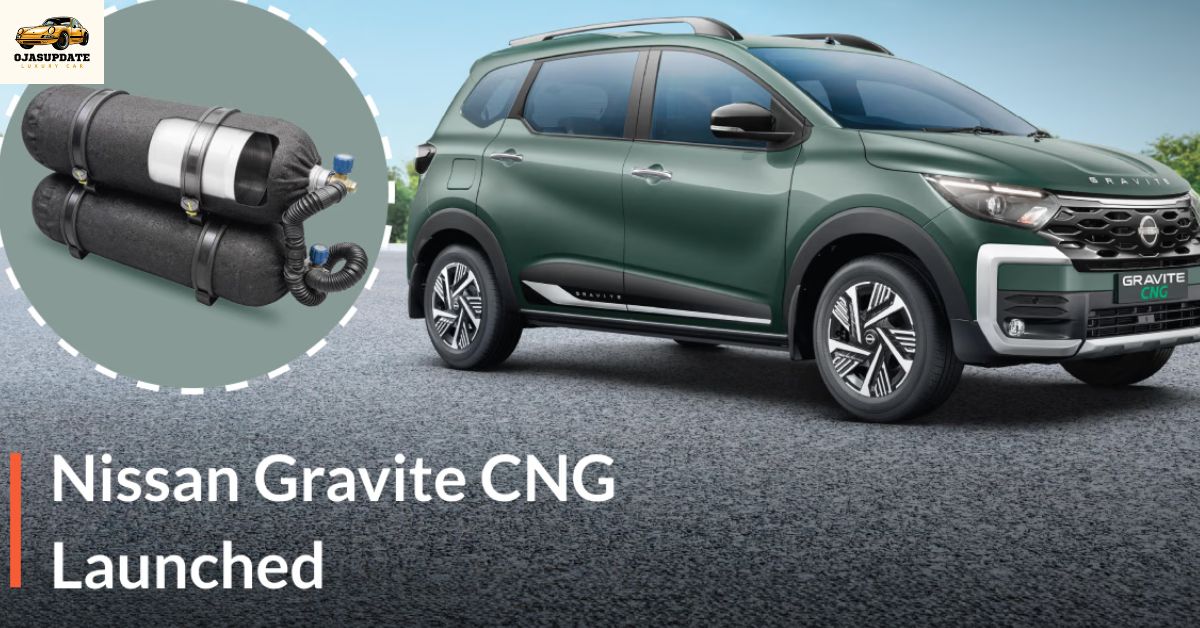
The traditional “single tank” setup involves one large, heavy cylinder (usually 60 litres) placed directly in the luggage area. Nissan’s innovative solution, developed in partnership with Motozen, replaces that single beast with two smaller, 25-litre tanks (50 litres total).
By using two smaller cylinders, Nissan has been able to:
- Preserve Seat Flexibility: In the 7-seater Gravite, this setup allows the third row to remain fully functional—a first for the segment.
- Maximize Boot Space: In the Magnite, the twin tanks sit lower and flatter, reclaiming a significant portion of the floor space that was previously unusable.
- Better Weight Distribution: Two smaller tanks allow for a lower center of gravity, which helps maintain the car’s original handling dynamics.
The Nissan Gravite: A CNG MPV Without the Bulk
The standout application of this tech is on the Nissan Gravite, a budget-friendly 7-seater MPV. Historically, adding CNG to a 7-seater meant the rear-most passengers were essentially hugging a gas tank.
With the new retrofitment kit, priced at an introductory ₹82,999, the Gravite maintains its full seating capacity while offering a range that significantly undercuts the cost of petrol. It uses the reliable 1.0-litre B4D engine, delivering a certified mileage of 19.3 km/kg. For large families or fleet operators, this is a game-changer.
Tech-Focused and Safety-First
Nissan hasn’t just “bolted on” these tanks; they’ve integrated them with the same level of engineering you’d expect from a factory finish.
| Feature | Specification / Detail |
| Cylinder Capacity | Twin 25L tanks (Total 50L) |
| Warranty | 3 years or 100,000 km |
| Fuel Integration | Nozzle neatly tucked under the existing fuel lid |
| Safety Certification | ICAT approved and BS6.2 compliant |
| Technology | Dynamic Advancer for smooth Petrol-to-CNG switching |
One of the most impressive details is the 8.1mm thick cylinder walls, designed specifically for maximum durability and safety in the event of a rear-end collision. The system also features a “leak detection” sensor that automatically shuts off the gas supply if any pressure irregularity is detected.
Why Now? The 2026 Market Shift
In mid-2026, the cost of petrol remains a primary concern for the average Indian commuter. However, as the “premiumization” trend continues, buyers are no longer willing to accept “bare-bones” economy cars. They want the fuel savings of CNG but the features of a top-tier SUV or MPV.
By offering this twin-cylinder setup as a government-approved retrofit across 60 cities and 16 states, Nissan is targeting the value-conscious yet tech-savvy buyer. It allows a customer to buy a high-spec Magnite Tekna or Gravite N-Connecta—with all the 360-degree cameras and leatherette interiors—and still enjoy the low running costs of green fuel.
The Competition
Nissan is entering a fierce arena. While Tata Motors pioneered the twin-cylinder concept, Nissan’s entry brings this technology to the MPV segment in a way that rivals like the Renault Triber (which currently uses a single-tank dealer fitment) have yet to match.
Final Verdict: The Smart Way to Save
The launch of the Nissan Twin-Cylinder CNG marks the end of the “luggage vs. fuel” debate. For ₹82,999, current and new owners can transform their petrol Nissan into a dual-fuel machine that doesn’t feel like a compromise.
Whether you’re an urban professional looking to slash your daily commute costs in the Magnite or a family head needing a practical long-distance hauler in the Gravite, Nissan’s new tech proves that the future of CNG is smaller, smarter, and significantly more spacious.
About the Author