Few cars command the reverence of the Nissan R32 GT‑R. Nicknamed “Godzilla” for its dominance in motorsport during the late 1980s and early 1990s, the R32 GT‑R is a legend of Japanese performance engineering. With its twin‑turbocharged RB26DETT engine, advanced ATTESA all‑wheel‑drive system, and Super‑HICAS rear‑steering, it was a technological marvel that crushed competition on track and became a cult hero on the streets.
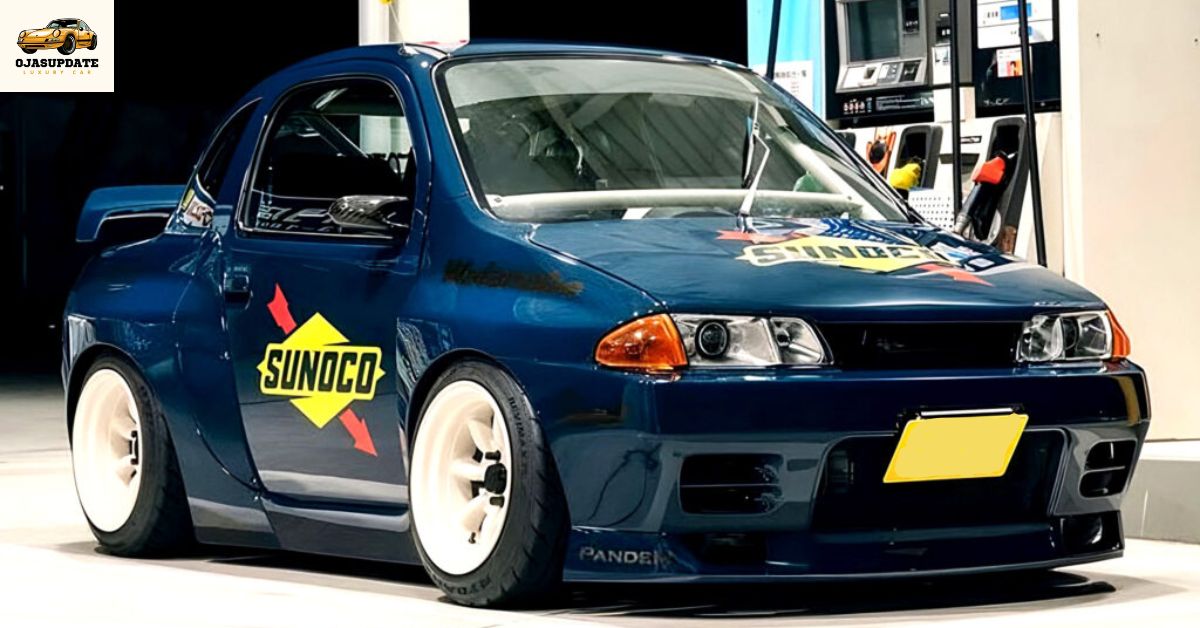
So when images of a tiny, shrunken R32 GT‑R began circulating online, many enthusiasts did a double‑take. Was this a clever AI rendering, a scale model, or an actual downsized build? The proportions looked uncanny—like someone had taken the Godzilla silhouette and compressed it into kei‑car dimensions. The result was both adorable and unsettling, sparking debates across car forums and social media.
The Allure of the Miniature GT‑R
Car culture has always had a fascination with scale. From die‑cast models to full‑size replicas, enthusiasts love reimagining icons in different forms. But the tiny R32 GT‑R goes beyond hobbyist modeling—it looks like a real, drivable vehicle shrunk down to cartoonish proportions.
- Proportions: The roofline, headlights, and boxy stance are unmistakably GT‑R, but the wheelbase and track width are dramatically reduced.
- Details: Even the rear wing and quad taillights are faithfully replicated, though they appear oversized relative to the smaller body.
- Effect: The result is a car that looks simultaneously authentic and surreal, as if AI image generators had been tasked with “make a cute version of the R32 GT‑R.”
Is It Real or AI?
The rise of generative AI has blurred the line between reality and digital trickery. Automotive enthusiasts are increasingly skeptical when unusual images surface online. The tiny R32 GT‑R is a perfect example:
- AI suspicion: The compressed proportions and toy‑like stance resemble AI‑generated car memes.
- Physical possibility: Custom builders have proven time and again that almost anything can be fabricated, from half‑scale Lamborghinis to kei‑car Ferraris.
- Community debate: Some argue it’s a genuine build, perhaps based on a small chassis with GT‑R body panels grafted on. Others insist it’s digital art designed to troll enthusiasts.
Regardless of its origin, the tiny GT‑R has captured imaginations precisely because it straddles the line between reality and illusion.
Why Shrink Godzilla?
If the miniature GT‑R is indeed real, the motivation is fascinating. Shrinking a motorsport icon could serve several purposes:
- Novelty builds: Custom shops often create quirky projects to showcase craftsmanship and attract attention.
- Kei car culture: Japan’s kei cars thrive on compact dimensions and playful styling. A kei‑sized GT‑R would be the ultimate mash‑up of performance heritage and urban practicality.
- Marketing stunt: Automakers and aftermarket brands sometimes commission outrageous builds to generate buzz. A tiny GT‑R would certainly achieve that.
The Cultural Impact
The tiny R32 GT‑R isn’t just a curiosity—it reflects broader trends in car culture:
- AI influence: As AI art proliferates, enthusiasts are learning to question authenticity. The tiny GT‑R embodies this tension.
- Playful reinterpretations: Iconic cars are increasingly reimagined in whimsical forms, from LEGO kits to Hot Wheels collaborations.
- Nostalgia meets novelty: The R32 GT‑R is a symbol of 1990s performance. Shrinking it down makes it approachable, almost toy‑like, appealing to a new generation raised on memes and digital culture.
Risks of Digital Trickery
While fun, AI‑like creations can also mislead:
- Collector confusion: Fake images of rare cars can distort perceptions of value.
- Brand dilution: Excessive parody risks undermining the gravitas of performance icons.
- Cultural skepticism: Enthusiasts may grow cynical, doubting even legitimate builds when AI trickery is suspected.
Conclusion
The tiny R32 GT‑R—whether real or AI trickery—has become a viral sensation because it challenges our expectations. We’re used to seeing Godzilla as a hulking, track‑devouring monster. Compressing it into pint‑sized proportions flips that narrative, creating something both hilarious and oddly endearing.
In the end, the miniature GT‑R is less about horsepower and lap times, and more about imagination. It’s a reminder that car culture thrives not only on engineering excellence but also on playful reinterpretation. Whether it’s a genuine build or an AI illusion, the tiny R32 GT‑R proves that even legends can be reimagined—and sometimes, shrinking Godzilla makes it larger than life in our collective imagination.
About the Author