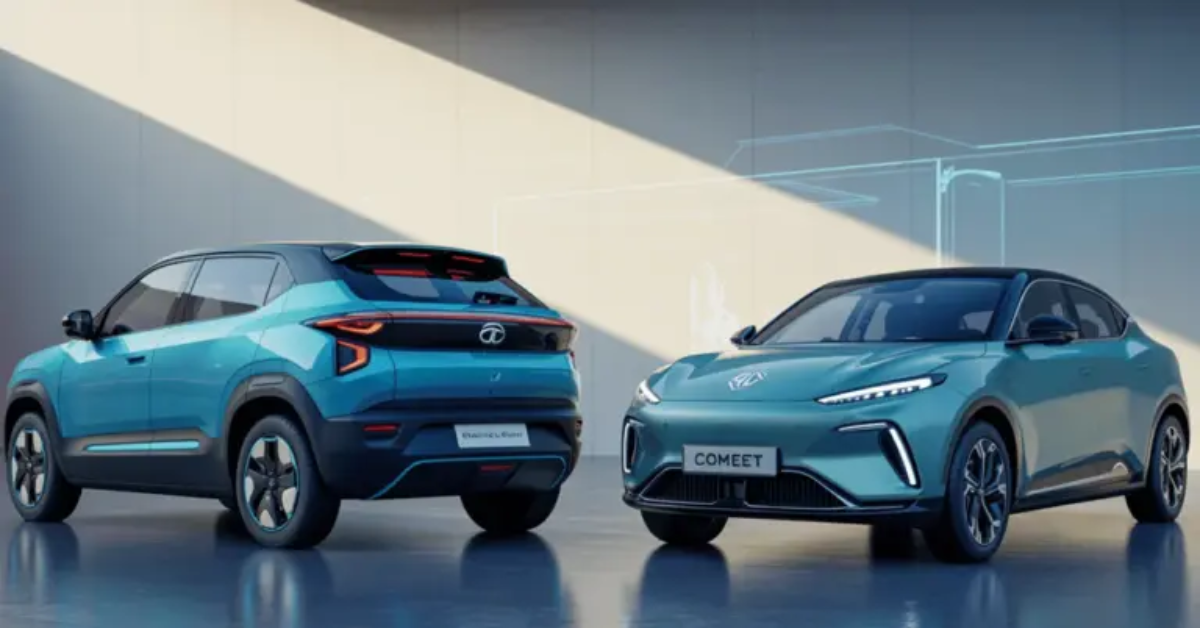
India’s electric vehicle (EV) segment is rapidly expanding, and compact EVs are gaining popularity among urban commuters. Two exciting options in this space are the Tata Punch EV and the MG Comet EV. Both vehicles promise eco-friendly commuting, attractive designs, and modern technology. This comparison will help Indian buyers decide which EV suits their lifestyle and budget best.
Exterior Design: Bold vs Futuristic
The Tata Punch EV maintains the bold and rugged design of the regular Punch while incorporating electric vehicle styling cues. Its elevated stance, sharp headlamps, and muscular wheel arches make it look strong on city streets. The front grille is redesigned to reflect EV aesthetics, giving it a modern yet familiar look.
The MG Comet EV, in contrast, features a futuristic and compact design tailored for urban mobility. Its smooth lines, aerodynamic silhouette, and compact footprint make it ideal for city driving. LED lighting elements, a modern front fascia, and minimalistic rear styling give the Comet EV a high-tech and youthful appeal.
Verdict: Tata Punch EV is bold and SUV-like, while MG Comet EV is sleek and futuristic.
Interior and Cabin Comfort
Inside the Tata Punch EV, the cabin combines practicality with comfort. There is ample space for driver and passengers, and the seating is ergonomically designed. The dashboard features a modern digital instrument cluster and touchscreen infotainment system with connectivity options such as Apple CarPlay and Android Auto.
The MG Comet EV focuses on space efficiency. While more compact than the Punch EV, it offers a comfortable seating arrangement for city commuters. The minimalist interior design emphasizes simplicity and modern technology, with digital displays and connected car features included in higher trims.
Verdict: Punch EV offers more space and family-friendly comfort, whereas Comet EV prioritizes compactness and city convenience.
Performance and Driving Experience
The Tata Punch EV is equipped with an electric motor that delivers smooth acceleration and adequate power for city and suburban driving. Its suspension is tuned for comfort, absorbing bumps and irregularities on Indian roads effectively. The Punch EV provides a stable and composed ride with confident handling for an SUV-style vehicle.
The MG Comet EV is designed primarily for urban commuting. It offers quick acceleration suitable for city traffic and easy maneuverability in tight spaces. While not as robust as the Punch EV, it is nimble and energy-efficient, making it ideal for short city trips.
Verdict: Punch EV is better for stability and versatility, while Comet EV is perfect for city-focused driving.
Battery, Range, and Charging
Range and battery performance are critical for EV buyers. The Tata Punch EV is expected to feature a battery pack that delivers a practical range suitable for daily city and suburban commutes. Fast-charging capability allows quick top-ups, reducing downtime for drivers.
The MG Comet EV, being a compact city EV, is designed for shorter daily trips. Its battery provides sufficient range for urban use, and the smaller battery pack ensures faster charging cycles. However, it may require more frequent charging on longer trips.
Verdict: Punch EV offers longer range and versatility, while Comet EV is optimized for short urban trips.
Technology and Features
The Tata Punch EV comes with modern EV features, including a digital instrument cluster, infotainment system with smartphone connectivity, and safety features such as dual airbags, ABS, and stability control. Higher variants may include connected car functionality for navigation, remote monitoring, and real-time updates.
The MG Comet EV emphasizes urban connectivity and smart technology. Features include touchscreen displays, smartphone integration, regenerative braking, and basic safety systems. While compact, it incorporates enough modern technology to make city commuting convenient and enjoyable.
Verdict: Punch EV offers a richer feature set, whereas Comet EV focuses on essential smart features for city life.
Safety and Build Quality
Tata vehicles are known for strong build quality, and the Punch EV continues this trend. Its rigid structure, safety systems, and crash-tested design provide confidence for families and solo riders alike.
MG Comet EV, while compact, incorporates standard safety features suitable for urban driving, such as ABS, airbags, and electronic stability support. Its lightweight structure is optimized for city speeds but may not offer the same robustness as the Punch EV.
Verdict: Punch EV has stronger safety credentials, while Comet EV is safe for short city rides.
Price and Affordability
The Tata Punch EV is priced to appeal to buyers looking for a versatile compact EV with premium features. EMI and financing options make it accessible to a broader audience, especially for families or urban professionals.
The MG Comet EV is positioned as a budget-friendly city EV, perfect for first-time electric vehicle buyers. Its compact size and simpler features contribute to a lower price point, making it easier for young professionals or small families to adopt electric mobility.
Verdict: Punch EV is a premium compact SUV EV, while Comet EV is more budget-friendly and urban-oriented.
Who Should Choose Which EV?
- Tata Punch EV is ideal for:
- Buyers seeking a bold SUV-like EV with family-friendly space
- Users looking for longer range and versatile commuting
- Those who prioritize features, safety, and comfort
- MG Comet EV is ideal for:
- Urban commuters needing a compact and easy-to-park EV
- First-time EV buyers with a limited budget
- Users focused on short daily trips and city efficiency
Final Verdict: SUV Comfort vs Urban Agility
The Tata Punch EV and MG Comet EV serve different purposes but excel in their respective niches. Punch EV stands out as a versatile, family-friendly compact SUV with long-range capability, advanced features, and premium feel. MG Comet EV shines as an agile, budget-friendly urban EV designed for city streets, short trips, and first-time EV adoption.
Indian buyers must choose based on their commuting needs, family size, range requirements, and budget. Both vehicles are strong contenders in the growing compact EV segment and reflect India’s transition toward cleaner and smarter mobility.
About the Author