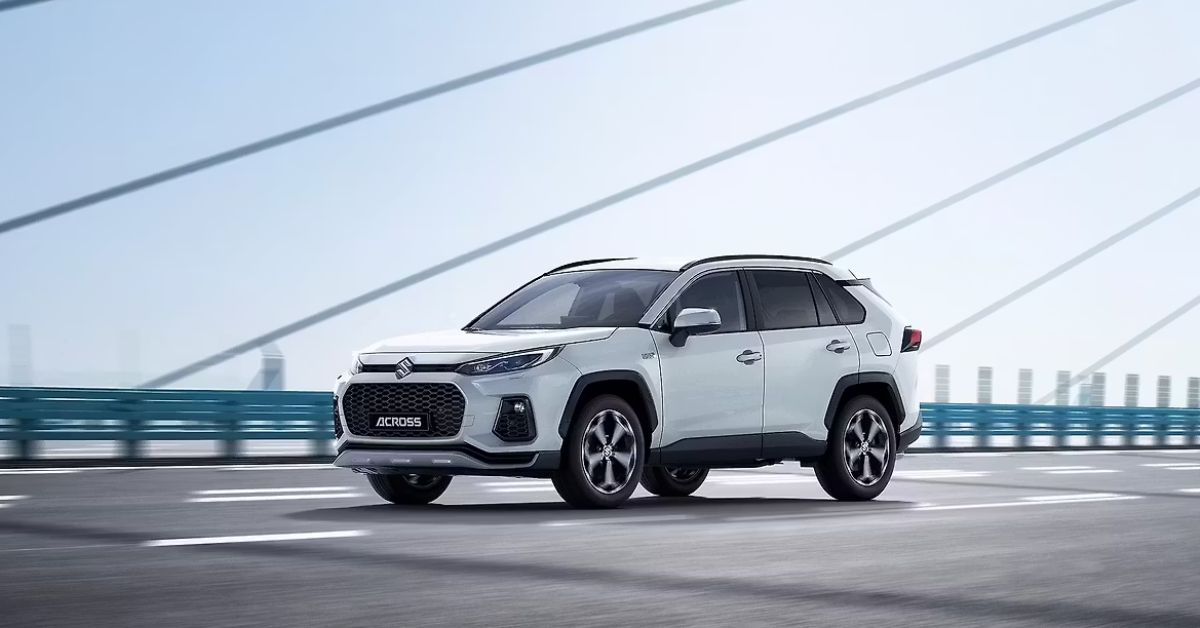
Suzuki’s latest Across returns as a close sibling to the Toyota RAV4, carrying over the RAV4’s plug‑in hybrid architecture and much of its design while wearing Suzuki badging and subtle styling differences. The new Across is positioned as a rugged, family‑friendly PHEV that prioritizes efficiency and capability over radical differentiation.
Quick comparison
| Attribute | Suzuki Across (new) | Toyota RAV4 (PHEV / Adventure) |
|---|---|---|
| Power | ~300–302 hp | ~300 hp |
| Powertrain | Plug‑in hybrid AWD | Plug‑in hybrid AWD |
| 0–62 mph / 0–100 km/h | 6.1 sec | ~6.1 sec |
| Availability | Europe‑focused; unlikely US | Global (wider markets) |
| Notable features | Rugged Adventure styling; dual displays; HUD | Multiple trims incl. Adventure; broad dealer network |
What’s new and why it matters
The Across follows Suzuki’s established badge‑engineering partnership with Toyota: the new model is essentially the latest RAV4 plug‑in hybrid adapted with Suzuki’s front‑end styling and brand touches. That means buyers get Toyota’s mature PHEV hardware and software while choosing Suzuki for brand preference, dealer relationships, or emissions compliance strategies in Europe.
For Suzuki, the Across serves two strategic purposes: it helps the brand meet tightening European emissions rules by offering a high‑efficiency PHEV, and it fills a product gap for customers who want a rugged, electrified compact SUV without stepping into Toyota showrooms.
Design and interior
Visually the Across mirrors the RAV4 Adventure (also marketed in some regions as the Woodland Edition), adopting the same boxy, off‑road‑leaning cues: pronounced fender cladding, a muscular grille, and a purposeful stance. Suzuki’s designers have kept changes minimal—enough to carry the Suzuki emblem without altering the RAV4’s proven aerodynamic and packaging advantages.
Inside, the Across offers modern conveniences expected in this segment: dual digital displays, a head‑up display, heated power seats, and a full suite of driver aids. The cabin layout and technology closely follow Toyota’s ergonomics, giving Suzuki customers a premium, well‑integrated infotainment and safety experience.
Powertrain and performance
The Across is exclusively offered with a plug‑in hybrid powertrain that pairs a petrol engine with electric motors and an AWD system. Combined output is around 300–302 hp, enabling brisk acceleration—Toyota‑sourced figures put 0–62 mph at 6.1 seconds—which is impressive for a family‑oriented compact SUV and places the Across in a performance‑capable PHEV class. The AWD system and PHEV range make it practical for mixed‑use buyers who want both efficiency and capability.
Because the Across shares Toyota’s hybrid hardware, it benefits from Toyota’s experience in hybrid energy management and reliability—an important selling point for buyers who prioritize long‑term ownership costs and proven technology.
Market positioning and availability
Suzuki has historically offered the Across primarily in Europe to help meet regional emissions targets; the new generation appears to follow that pattern and is not expected to be sold in the U.S. market. That Europe focus reflects both regulatory strategy and Suzuki’s current product planning, though shifting market conditions could change distribution decisions over time.
For European buyers, the Across is attractive because it combines Toyota’s PHEV efficiency with Suzuki’s value proposition and dealer network. For buyers outside Europe, the Across highlights how automakers use platform sharing to deliver electrified options quickly and cost‑effectively.
Strengths and trade‑offs
Strengths
- Proven Toyota PHEV hardware and AWD capability.
- Strong combined power and quick acceleration for the segment.
- Modern interior tech and safety features carried over from the RAV4.
Trade‑offs
- Limited differentiation from the RAV4 may disappoint buyers seeking a uniquely Suzuki identity.
- Europe‑centric availability limits global reach for customers in other regions.
Conclusion
The new Suzuki Across is a pragmatic, well‑executed PHEV that leverages Toyota’s RAV4 strengths while giving Suzuki a competitive electrified SUV in markets that demand lower emissions and higher efficiency. It’s a smart example of platform sharing done with restraint: buyers gain proven hybrid performance and modern features, while Suzuki gains a credible, low‑risk route into the electrified compact SUV market.
About the Author