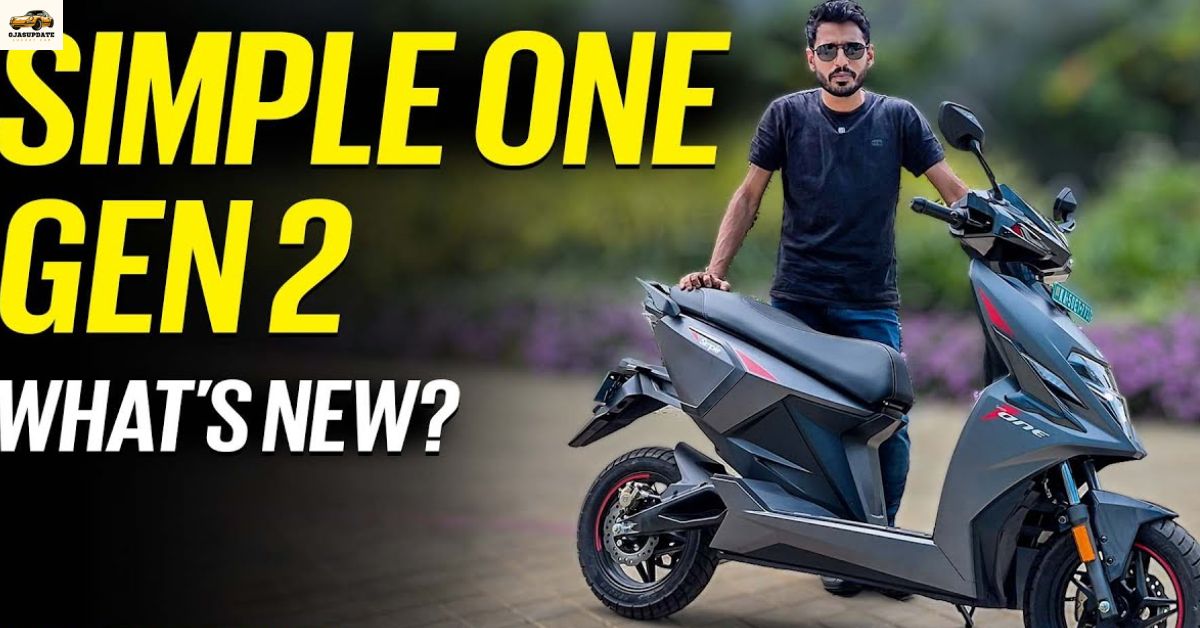
India’s electric two-wheeler market is evolving at lightning speed, and Bengaluru-based Simple Energy has been at the forefront with its flagship scooter, the Simple One. After the initial launch in 2021 and a Gen 1.5 update in 2025, the company has now introduced the Simple One Gen 2 in 2026. With a bigger battery, more range, and refined performance, the Gen 2 aims to set new benchmarks in the EV scooter segment.
Design and Styling
Visually, the Gen 2 retains the familiar silhouette of the original Simple One but with subtle refinements:
- Aerodynamic Panels: Updated front and rear panels for a sleeker look.
- Compact Dimensions: Still slim and agile, ideal for urban commuting.
- Build Quality: Improved fit and finish, though some reviewers note it still lags behind premium rivals.
The scooter’s design balances futuristic appeal with practicality, making it approachable for everyday riders.
Battery and Range
The headline feature of the Gen 2 is its larger 5kWh battery pack, which delivers a claimed range of 265 km on a single charge.
- Variants:
- 5kWh (top-spec Gen 2)
- 4.5kWh mid-range option
- 3.7kWh entry-level Simple One S
- Charging: Compatible with home charging setups, though fast-charging infrastructure remains limited.
This range figure is among the highest in India’s EV scooter market, addressing one of the biggest concerns—range anxiety.
Performance and Ride Quality
The Gen 2 builds on the strengths of its predecessor with smoother and sharper dynamics:
- Acceleration: Responsive throttle, especially in “Air” mode.
- Handling: Sharp and agile, making it fun to ride in city traffic.
- Comfort: Improved suspension tuning for better ride quality.
- Top Speed: Around 105 km/h, competitive with rivals like the Ola S1 Pro and Ather 450X.
However, reviewers note that stability at high speeds could be improved, and some features still feel unfinished.
Technology and Features
Simple Energy has packed the Gen 2 with modern tech:
- Digital Display: Sleek instrument cluster with navigation and connectivity.
- Riding Modes: Multiple modes including Eco, Ride, Dash, and Air.
- Smart Features: OTA updates, app integration, and regenerative braking.
These features make the Gen 2 more than just a scooter—it’s a connected mobility solution.
Market Positioning
The Simple One Gen 2 is positioned as a premium long-range EV scooter:
- Target Audience: Urban commuters, tech-savvy riders, and those seeking long-distance usability.
- Competition: Ola S1 Pro, Ather 450X, TVS iQube, and Bajaj Chetak EV.
- Pricing: Expected to be competitive, though final pricing will determine its success against established rivals.
Strengths and Weaknesses
Strengths:
- Class-leading 265 km claimed range.
- Improved ride quality and handling.
- Modern tech features and connectivity.
Weaknesses:
- Stability issues at high speeds.
- Build quality still not at par with premium rivals.
- Charging infrastructure remains a challenge.
Conclusion
The Simple One Gen 2 represents a significant step forward for India’s EV scooter market. With its 5kWh battery, 265 km range, and refined performance, it addresses key consumer concerns while offering a fun and connected riding experience. While not perfect—particularly in terms of high-speed stability and build quality—it shows how Indian startups are pushing boundaries in electric mobility.
For riders seeking a practical yet futuristic scooter, the Gen 2 is a compelling option that blends range, performance, and technology in a package designed for India’s roads.
About the Author