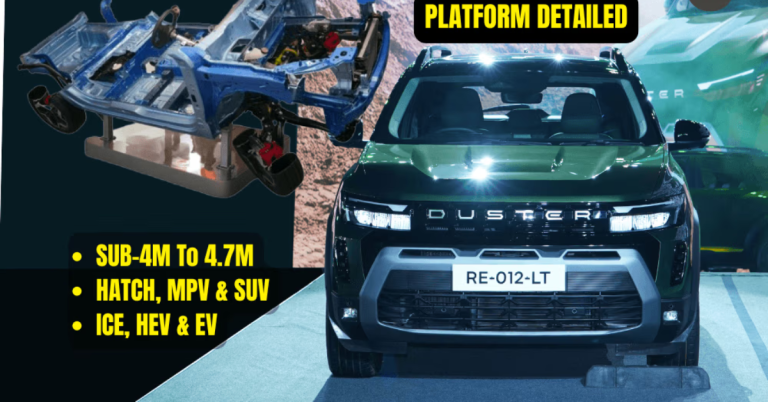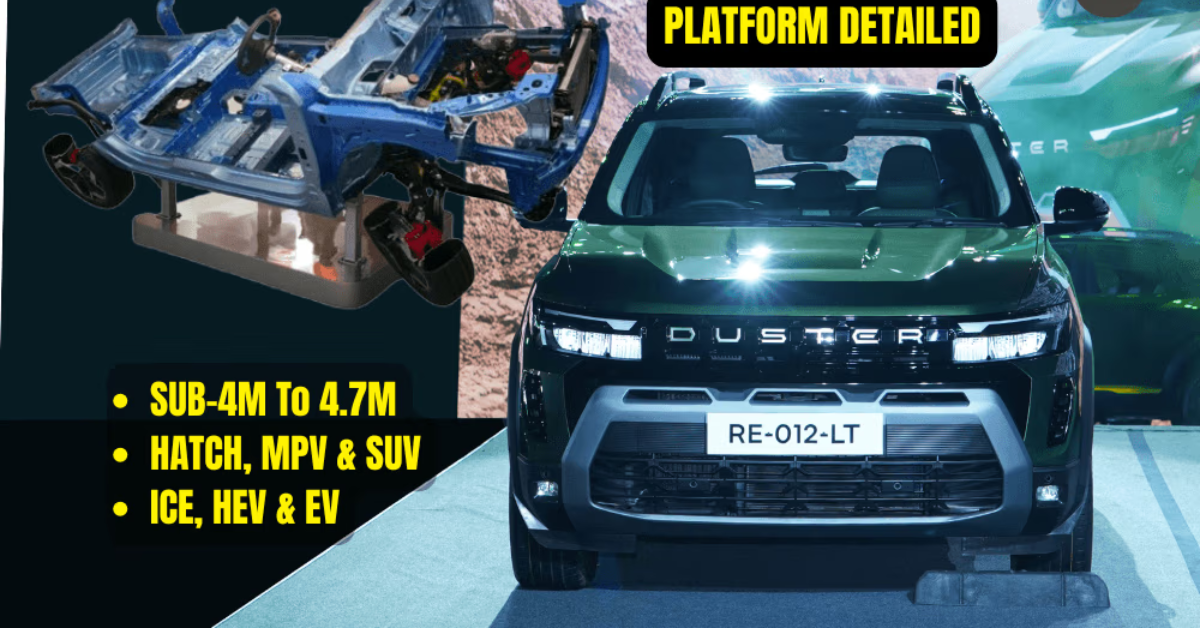
The automotive industry is rapidly evolving as manufacturers focus on advanced vehicle platforms, flexible engineering, and cost-efficient production strategies. One of the latest developments attracting attention is Renault’s new global modular platform, which underpins the next-generation Duster and has the potential to support multiple upcoming vehicle segments.
This innovative architecture is designed to be extremely flexible, allowing Renault to build a wide variety of vehicles including compact SUVs, crossover SUVs, sedans, and multi-purpose vehicles (MPVs) on the same platform. The strategy helps the company reduce development costs while delivering modern vehicles with improved safety, performance, and efficiency.
What makes this platform even more exciting is its ability to support a compact SUV that could rival popular sub-compact SUVs in emerging markets, along with larger family vehicles. In this article, we explore how Renault’s new modular architecture works, its technological advantages, and what future models could emerge from this versatile platform.
What Is Renault’s Global Modular Platform?
A modular vehicle platform is essentially the engineering foundation of a car, including the chassis structure, suspension layout, and core mechanical components. Instead of designing a completely new architecture for every vehicle, manufacturers develop one flexible platform that can support multiple body styles and sizes.
Renault’s new global platform represents a major step forward in vehicle engineering. It allows the company to produce different types of vehicles with varying dimensions, wheelbases, and powertrains while maintaining the same core structural design.
This approach not only improves production efficiency but also ensures that all vehicles built on the platform benefit from modern technology, improved safety standards, and advanced design capabilities.
Designed for Multiple Vehicle Segments
One of the biggest advantages of this platform is its ability to support multiple vehicle segments.
Instead of focusing on a single SUV or crossover, Renault can create an entire product lineup based on the same architecture.
Possible Vehicle Types
The platform can potentially support:
- Compact SUVs
- Sub-compact SUVs
- Mid-size SUVs
- Sedans
- MPVs (multi-purpose vehicles)
- Crossover vehicles
This flexibility allows Renault to quickly introduce new vehicles in different markets without starting from scratch.
For consumers, this means more choices, better pricing, and faster product launches.
Potential Compact SUV Rival in the Market
One of the most interesting possibilities is the development of a new compact SUV designed to compete in the highly competitive sub-compact SUV segment.
This category has become one of the fastest-growing segments in the automotive market due to its combination of affordability, practicality, and modern design.
A new Renault SUV built on the modular platform could offer:
- Bold SUV styling
- Advanced safety features
- Modern infotainment technology
- Efficient turbocharged engines
- Competitive pricing
Such a model could become a strong competitor in markets where compact SUVs dominate consumer demand.
Improved Structural Strength and Safety
Modern vehicle platforms must meet increasingly strict global safety regulations.
Renault’s new architecture is engineered to deliver improved structural rigidity while maintaining a lightweight design.
Safety Advantages
The platform can support advanced safety features such as:
- Multiple airbags
- Electronic stability control
- Advanced driver assistance systems
- Improved crash protection
- Stronger body structure
These improvements help ensure that vehicles built on the platform meet modern safety expectations while maintaining excellent driving dynamics.
Compatibility with Multiple Powertrains
Another important feature of the new modular platform is its ability to support various powertrain technologies.
Automakers are transitioning toward cleaner and more efficient engines, and flexible platforms make this transition easier.
Possible Powertrain Options
Vehicles based on the platform could include:
- Petrol engines
- Turbocharged petrol engines
- Hybrid powertrains
- Mild-hybrid systems
- Potential future electrified options
This versatility ensures that Renault can adapt to different emission regulations and consumer preferences across global markets.
Manufacturing Efficiency and Cost Savings
From a business perspective, modular platforms provide significant cost advantages.
Developing an entirely new architecture for every vehicle requires massive investments in research, engineering, and manufacturing.
By using a shared platform, Renault can:
- Reduce development costs
- Speed up vehicle production
- Improve parts sharing across models
- Simplify manufacturing processes
These efficiencies often translate into more competitively priced vehicles for customers.
Design Flexibility for Future Vehicles
The modular platform also allows designers and engineers to experiment with different body styles and vehicle layouts.
For example, Renault could create:
- Sporty compact crossovers
- Practical family MPVs
- Stylish sedans for urban drivers
- Rugged off-road SUVs
Each vehicle can have a unique design while still benefiting from the same proven engineering foundation.
This design freedom helps manufacturers quickly respond to changing market trends and customer demands.
Advanced Technology Integration
Modern vehicles rely heavily on digital technology, connectivity, and driver assistance systems.
Renault’s new platform is designed to support next-generation automotive technology, including:
- Large touchscreen infotainment systems
- Wireless smartphone connectivity
- Digital instrument clusters
- Over-the-air software updates
- Smart driver assistance features
These technologies are becoming increasingly important for buyers who expect their vehicles to provide a modern and connected driving experience.
Strengthening Renault’s Global Strategy
The development of a global modular platform also supports Renault’s long-term business strategy.
By creating vehicles that can be easily adapted for different regions, the company can expand its presence in emerging markets as well as established automotive markets.
This platform could become the foundation for Renault’s next generation of vehicles worldwide, helping the brand compete more effectively in multiple segments.
The Future of Modular Automotive Platforms
Modular vehicle platforms are becoming the industry standard because they offer the perfect balance of engineering efficiency, design flexibility, and cost optimization.
Many leading manufacturers now rely on similar strategies to develop entire vehicle lineups.
As automotive technology continues to evolve, these platforms will likely support even more innovations such as:
- Advanced hybrid systems
- Fully electric powertrains
- Autonomous driving technology
- Lightweight materials
This means the platform powering the next-generation Duster could remain relevant for many years as Renault continues to expand its product portfolio.
Final Thoughts
Renault’s new global modular platform represents a significant step forward in modern automotive engineering. Designed to support multiple vehicle segments including compact SUVs, sedans, MPVs, and crossovers, it offers the flexibility needed to meet the demands of today’s dynamic automotive market.
By combining advanced safety, versatile powertrain compatibility, modern technology integration, and manufacturing efficiency, this platform could become the backbone of Renault’s future vehicle lineup.
Perhaps the most exciting possibility is the development of a new compact SUV capable of competing in one of the fastest-growing segments, giving consumers another strong option in the market.
As automakers continue to innovate and invest in modular architectures, drivers can expect more advanced, efficient, and technologically sophisticated vehicles in the years ahead.
About the Author