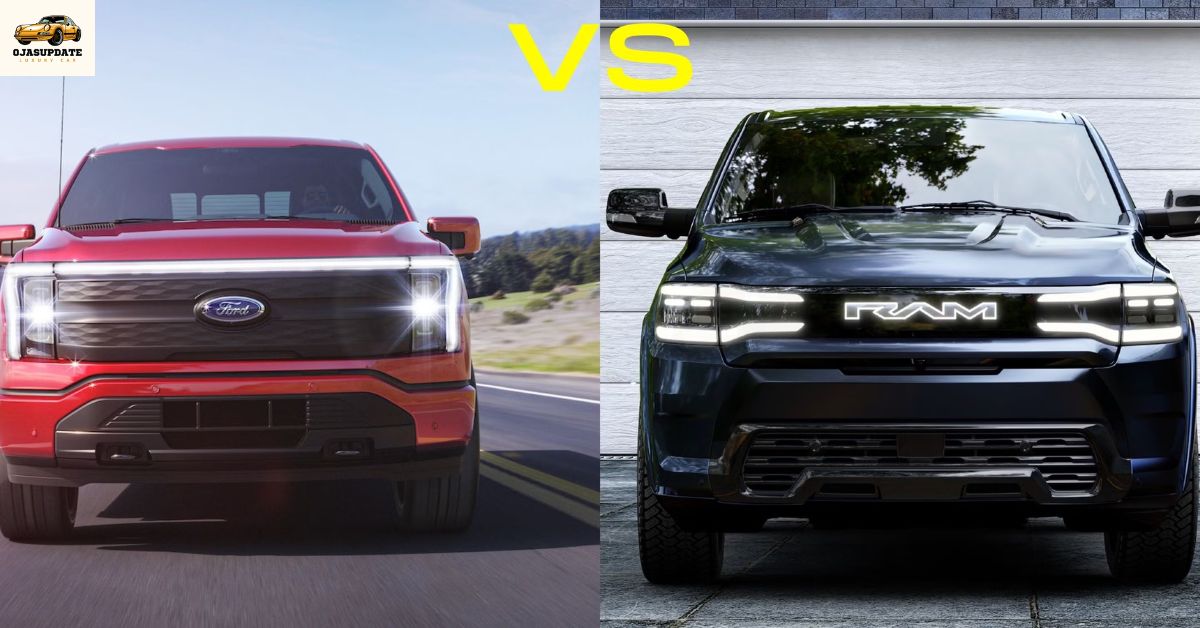
The American pickup truck has long been a symbol of power, utility, and freedom. Now, in the age of electrification, two giants—Ram and Ford—are redefining what a full-size truck can be. The 2025 Ram 1500 REV and the Ford F-150 Lightning represent two distinct visions of the electric truck future, each with strengths and challenges.
Ram 1500 REV: Stellantis’ Bold Entry
Ram was the last of Detroit’s “Big Three” to unveil its fully electric pickup, but it arrived swinging. The Ram 1500 REV boasts a targeted 500-mile range on a single charge, far surpassing rivals. This figure comes from its massive 229 kWh battery pack, with a smaller 168 kWh option offering around 350 miles.
Performance is equally impressive:
- 654 horsepower and 620 lb-ft of torque.
- 0–60 mph in 4.4 seconds, rivaling sports cars.
- Towing capacity of 14,000 pounds and payload of 2,700 pounds.
Ram also emphasizes luxury and technology. The interior features a 14.5-inch touchscreen, premium materials, and advanced driver-assistance systems. With bidirectional charging, the truck can power homes or job sites, positioning it as both a workhorse and lifestyle vehicle.
Ford F-150 Lightning: The Pioneer
Ford’s F-150 Lightning was the first mainstream electric pickup to hit the market, leveraging the popularity of the F-Series—the best-selling truck in America for decades. It offers:
- Up to 320 miles of range with the extended battery.
- 563 horsepower and 775 lb-ft of torque.
- Towing capacity of 10,000 pounds.
The Lightning introduced innovations like the Mega Power Frunk, a massive front trunk with power outlets, and Pro Power Onboard, turning the truck into a mobile generator. These features made it a hit with contractors and outdoor enthusiasts.
However, Ford recently announced it will phase out the fully electric Lightning in favor of a range-extended EV. This new model will combine battery power with a small engine to deliver 700+ miles of total range, addressing consumer concerns about charging infrastructure and long-haul usability.
Comparing Strategies
The contrast between Ram and Ford highlights two philosophies:
- Ram bets on big batteries: By offering extreme range, Ram appeals to buyers who want confidence in long-distance travel without compromise.
- Ford pivots to hybrids: By adding a range extender, Ford acknowledges that charging networks remain inconsistent and that customers value convenience over pure electrification.
Both approaches aim to solve the same problem—range anxiety—but in different ways.
Market Impact
The competition between Ram and Ford will shape the EV truck market:
- Ram’s 500-mile range sets a new benchmark, pressuring rivals like GM’s Silverado EV.
- Ford’s range-extended Lightning could attract buyers hesitant about full EVs, offering a middle ground.
- Consumers benefit from innovation, as each brand pushes the other to improve.
Pros and Cons
Ram 1500 REV Pros:
- Industry-leading 500-mile range.
- High towing and payload capacity.
- Luxurious, tech-rich interior.
Ram 1500 REV Cons:
- Heavy battery increases cost and weight.
- Charging such a large pack may be time-consuming.
Ford F-150 Lightning Pros:
- Proven track record as the first mainstream EV truck.
- Innovative features like Mega Power Frunk.
- Upcoming range-extended model promises 700+ miles.
Ford F-150 Lightning Cons:
- Current EV version capped at 320 miles.
- Production challenges and shifting strategy may confuse buyers.
Final Thoughts
The Ram 1500 REV and Ford F-150 Lightning embody the future of trucks, but in different ways. Ram is betting on sheer battery power to deliver unmatched range, while Ford is evolving toward a hybridized EV solution to ease consumer concerns.
For buyers, the choice will depend on priorities: those who want maximum range and capability may lean toward Ram, while those who value convenience and flexibility may prefer Ford’s upcoming range-extended Lightning.
About the Author