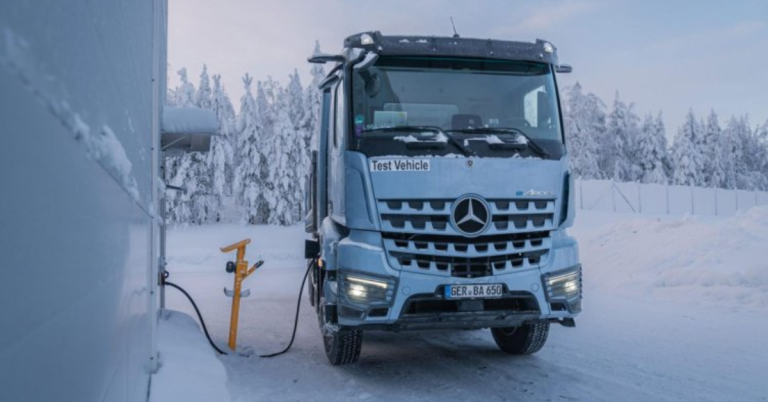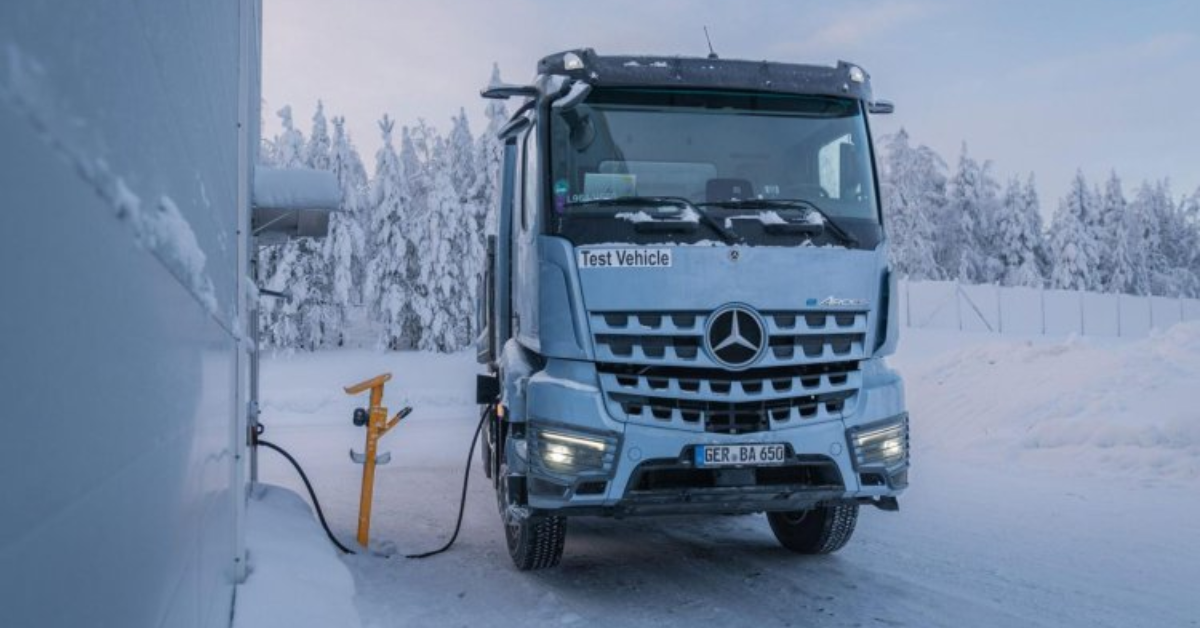
In a major milestone for heavy-duty electric mobility, Mercedes-Benz Trucks has successfully completed extreme cold-weather testing of the Mercedes-Benz eArocs 400 in Arctic conditions reaching -20 degrees Celsius.
This achievement represents a critical validation step for electric commercial vehicles operating in harsh climates. For fleet operators in construction, mining, municipal services, and infrastructure development, cold-weather reliability remains one of the biggest concerns surrounding battery-electric trucks.
By proving durability under sub-zero temperatures, Mercedes-Benz strengthens its position in the premium zero-emission heavy-duty truck segment.
Here’s a comprehensive 1000-word breakdown of what the Arctic testing means for the future of electric construction trucks and commercial fleet electrification.
Why Arctic Testing Matters for Electric Trucks
Electric vehicles face unique challenges in extreme cold conditions. Sub-zero temperatures can impact:
- Battery efficiency
- Charging speed
- Energy density
- Regenerative braking performance
- Cabin heating consumption
For heavy-duty applications such as construction and quarry operations, reliability in freezing climates is not optional — it is essential.
The successful -20°C testing of the eArocs 400 demonstrates that advanced battery management and thermal systems can withstand harsh winter environments.
The eArocs 400: Designed for Construction Demands
The eArocs 400 builds on the rugged legacy of the Arocs platform, widely known in construction logistics.
Key design characteristics include:
- Reinforced chassis for heavy payloads
- High torque electric drivetrain
- All-electric zero-emission operation
- Durable off-road capability
- Heavy-duty axle configurations
Unlike urban delivery EV trucks, the eArocs 400 is engineered for demanding job sites.
Battery Performance in -20°C Conditions
Cold weather typically reduces battery efficiency because lithium-ion cells experience increased internal resistance.
Mercedes-Benz addresses this through:
- Advanced thermal battery conditioning
- Active heating systems
- Intelligent energy management software
- Insulated battery housing
These systems maintain optimal battery temperature even in freezing environments, preserving range and performance.
Range & Operational Stability
Range anxiety becomes even more significant in commercial applications.
During Arctic validation, engineers evaluate:
- Real-world energy consumption
- Impact of cabin heating on range
- Load-carrying efficiency
- Charging consistency
- Power delivery under stress
Successful testing ensures that construction operators can depend on predictable daily range even during winter operations.
Electric Powertrain Advantages in Cold Weather
Interestingly, electric drivetrains can offer advantages over diesel engines in cold conditions.
Electric trucks:
- Deliver instant torque without warm-up delays
- Eliminate cold-start emissions spikes
- Reduce mechanical wear during ignition
- Operate more quietly in winter job sites
The absence of combustion-related starting issues gives electric platforms a technical edge in certain cold scenarios.
Charging in Extreme Temperatures
Charging efficiency often declines in low temperatures.
The eArocs 400’s cold testing includes:
- DC fast-charging validation
- Battery pre-conditioning before charging
- Charging time optimization
- Grid compatibility checks
Thermal preconditioning ensures that the battery reaches ideal charging temperature before energy transfer begins.
Construction Industry Electrification Trends
The construction sector is under increasing pressure to reduce emissions, particularly in urban areas with strict environmental regulations.
Electric construction trucks help:
- Lower CO₂ emissions
- Reduce particulate pollution
- Minimize job-site noise
- Meet zero-emission zone requirements
- Improve ESG compliance for contractors
High-CPC commercial keywords such as “fleet electrification,” “zero-emission trucks,” and “sustainable construction equipment” reflect growing industry demand.
Total Cost of Ownership (TCO) Impact
Fleet managers prioritize cost-per-mile metrics and lifecycle analysis.
Electric trucks offer:
- Lower fuel costs compared to diesel
- Reduced maintenance due to fewer moving parts
- Regenerative braking that extends brake life
- Potential government incentives
- Carbon credit eligibility
Arctic reliability testing reassures operators that winter performance will not erode these cost advantages.
Engineering Validation Process
Extreme weather testing is a standard part of commercial vehicle validation.
Testing procedures typically include:
- Continuous cold starts
- Frozen component stress analysis
- Suspension and traction testing on icy terrain
- Cabin climate system evaluation
- Electronic system durability checks
These processes simulate years of wear under winter conditions.
Competitive Landscape in Electric Heavy-Duty Trucks
The heavy-duty EV market is becoming increasingly competitive.
Manufacturers are investing heavily in:
- High-capacity battery packs
- Long-haul electrification
- Construction-specific electric platforms
- Charging infrastructure partnerships
By demonstrating Arctic capability early, Mercedes-Benz positions itself as a leader in reliable electric construction vehicles.
Sustainability & Corporate Strategy
Electrification is central to Mercedes-Benz Trucks’ long-term sustainability roadmap.
Cold-weather validation supports:
- Global market expansion
- Northern European deployment readiness
- Canadian and Alpine market suitability
- Mining sector electrification
- Municipal fleet adoption
Demonstrating performance in extreme climates expands addressable markets significantly.
Driver Comfort & Operational Benefits
Electric trucks provide enhanced operator experience.
Cold-weather benefits include:
- Instant cabin heating
- Reduced engine vibration
- Quieter job-site operation
- Smooth acceleration on slippery surfaces
- Advanced traction control systems
These features improve both safety and productivity.
Infrastructure Readiness & Market Expansion
As electric truck adoption grows, charging infrastructure must scale accordingly.
Cold testing also evaluates:
- Charging station compatibility
- Grid resilience in winter
- Depot charging performance
- Battery storage integration
Infrastructure confidence plays a critical role in commercial fleet electrification.
Broader Industry Implications
The successful Arctic testing of the Mercedes-Benz eArocs 400 signals broader trends:
- Electric trucks entering heavy-duty sectors
- Advancements in battery thermal management
- Increased regulatory pressure on diesel fleets
- Rising adoption in construction and mining industries
Manufacturers that validate performance in extreme climates gain a competitive advantage in global markets.
Future Outlook for Electric Construction Trucks
While diesel engines continue to dominate heavy construction, electrification is accelerating.
Key drivers include:
- Stricter urban emissions standards
- Government subsidies for zero-emission fleets
- Rising diesel fuel costs
- Corporate sustainability targets
- Technological advancements in battery density
Cold-weather durability removes one of the final psychological barriers to heavy-duty EV adoption.
Final Verdict
The successful -20°C Arctic testing of the Mercedes-Benz eArocs 400 marks a significant advancement in commercial vehicle electrification.
By combining:
- Advanced thermal battery management
- Rugged construction-ready engineering
- Reliable cold-weather charging
- Sustainable zero-emission performance
- Long-term operational efficiency
Mercedes-Benz Trucks demonstrates that electric heavy-duty trucks are no longer limited to mild climates.
For fleet operators in construction, infrastructure, and municipal services, Arctic validation provides confidence that electric trucks can perform year-round — even in some of the harshest environments on Earth.
The future of heavy-duty transportation is not only electric — it is increasingly proven, practical, and resilient.
About the Author