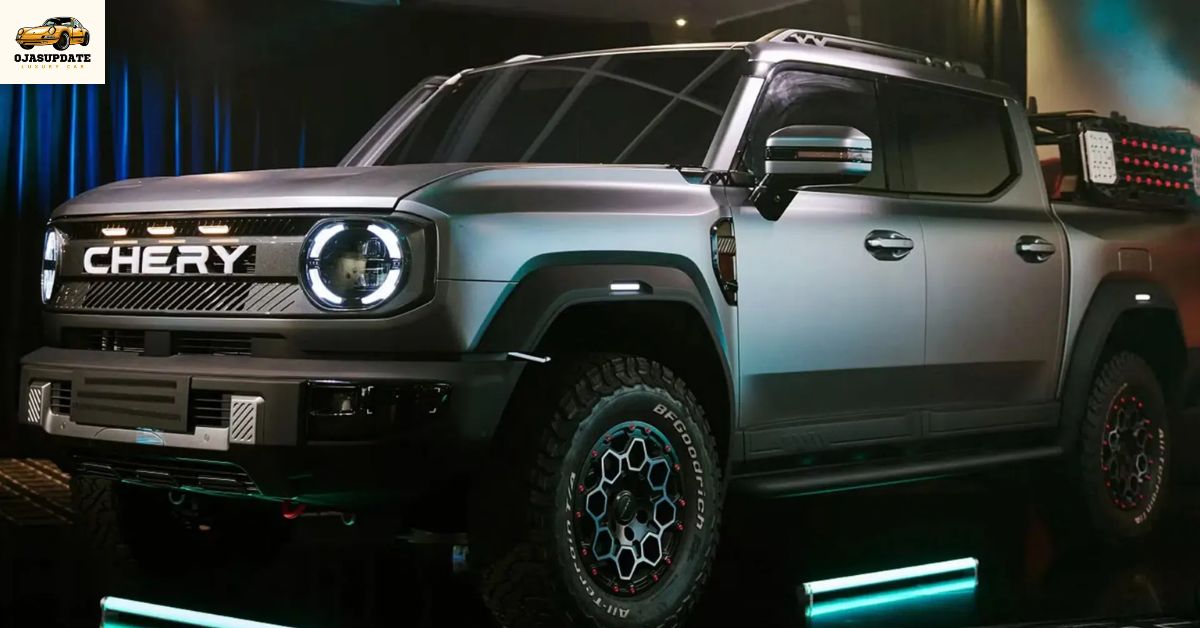
For decades, the American pickup truck has been more than just a vehicle; it’s been a fortress. Shielded by the “Chicken Tax” (a 25% tariff on imported light trucks) and fueled by a deep-seated cultural loyalty to brands like Ford, Chevy, and Ram, the domestic truck market seemed impenetrable.
But recently, Ford CEO Jim Farley issued a wake-up call that sent ripples through the automotive world. After a series of trips to China, Farley didn’t just return with notes on battery chemistry—he returned with a warning. He characterized the rapid rise of Chinese automakers, particularly in the pickup and commercial van segments, as an “existential threat.”
The Myth of the “Cheap” Chinese Knockoff
For years, Western executives comforted themselves with the idea that Chinese vehicles were merely low-quality clones of European or American designs. Farley’s recent comments debunk this outdated trope.
What he witnessed in China was a leapfrog in technology. Chinese manufacturers like BYD, Great Wall Motor (GWM), and Geely aren’t just making trucks; they are making high-tech, software-defined powerhouses that happen to have a bed in the back.
The “threat” Farley describes isn’t just about price—though the cost advantage is staggering—it’s about speed and integration. While Detroit is still navigating the transition from internal combustion engines (ICE) to electric vehicles (EVs), Chinese firms have spent the last decade perfecting a vertical supply chain. They own the mines, the battery factories, and the software stacks.
Efficiency as a Competitive Weapon
Jim Farley’s candor is refreshing and rare for a Big Three CEO. He noted that Chinese automakers are operating with a 20% to 30% cost advantage. In the world of high-margin pickups, that is the difference between a thriving business and a slow decline.
But it’s the speed of execution that truly unnerves the Ford leadership. In China, the product cycle is nearly twice as fast as in North America. By the time a legacy automaker refreshes a grille, a Chinese competitor has often overhauled an entire battery platform or introduced a revolutionary new UI.
“These guys are the best in the world,” Farley remarked at a recent industry conference. “We have to re-think what the Ford brand means in a world where the best technology is no longer guaranteed to be homegrown.”
The “Great Wall” of Protectionism
Currently, American truck dominance is protected by the aforementioned 25% tariff and a lack of established Chinese dealer networks. However, Farley is looking at the global scoreboard.
In markets like South America, Southeast Asia, and Australia, Chinese pickups are already eating into the market share once held by the Ford Ranger and Toyota HiLux. The BYD Shark, a plug-in hybrid pickup with more horsepower and better tech than many mid-size American trucks, is a prime example of the hardware currently circling the U.S. border.
If these trucks can win in the demanding outbacks of Australia or the rugged terrain of Brazil, the “quality” argument used by domestic defenders begins to crumble. Farley’s strategy is clear: Ford cannot rely on tariffs forever. Protectionism is a bandage, not a cure.
How Detroit Must Respond
So, what is the “Farley Plan”? It involves a radical shift in how Ford operates:
- Software-First Mentality: Shifting the focus from “bending metal” to creating a seamless digital ecosystem inside the cab.
- The “Skunkworks” Approach: Ford has established a secret EV team in California specifically tasked with developing a low-cost, high-efficiency platform to compete with Chinese pricing.
- Radical Simplification: Reducing the number of parts and complexity in their trucks to mirror the lean manufacturing seen in the East.
The Bottom Line
Jim Farley isn’t being a doomer; he’s being a realist. By acknowledging the prowess of Chinese pickups, he is attempting to shake the “incumbent’s complacency” out of Dearborn.
The American pickup truck is the crown jewel of the U.S. auto industry. It funds the R&D for everything else. If Detroit loses its grip on the truck, it loses its soul. Farley’s message is a call to arms: the competition is no longer across town in Auburn Hills or North of the border—it’s across the Pacific, and it’s moving faster than anyone expected.
About the Author