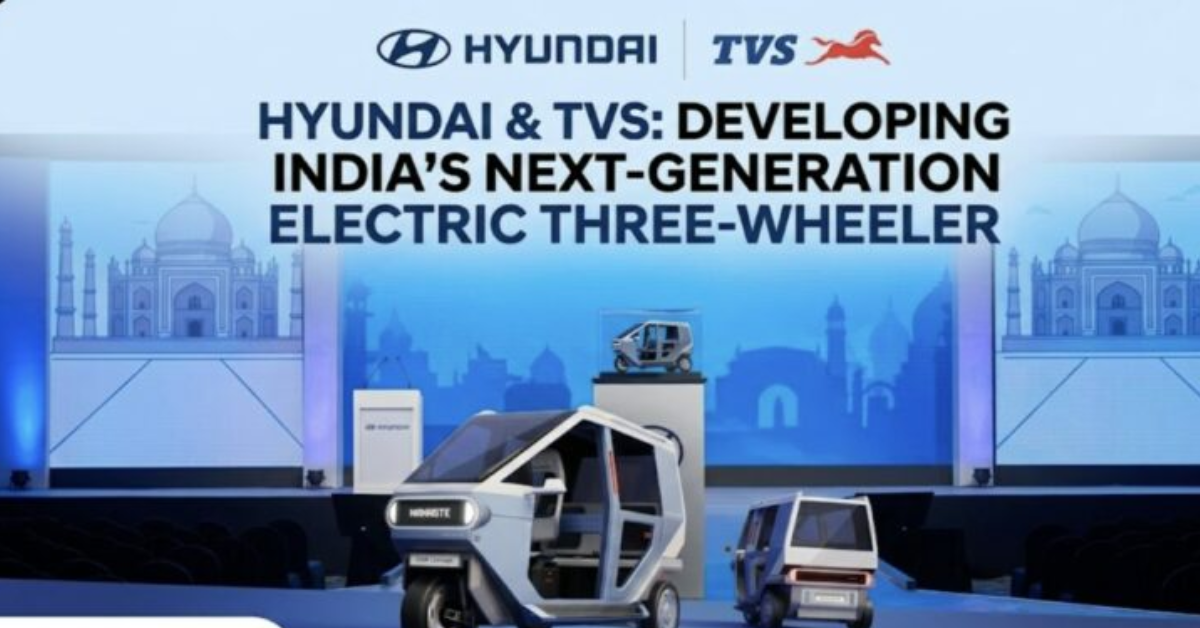
India’s electric mobility transformation is accelerating rapidly, and a new collaboration between two major automotive players is set to reshape the landscape. Hyundai Motor Company and TVS Motor Company have joined forces to develop electric three-wheelers tailored specifically for the Indian market.
This partnership is more than just another product development initiative—it represents a strategic move to tap into one of the most critical segments of India’s transportation ecosystem. Electric three-wheelers are not only essential for last-mile connectivity but also play a vital role in commercial mobility, logistics, and urban transportation.
Why Electric Three-Wheelers Matter in India
Three-wheelers are a backbone of India’s mobility system. From passenger auto-rickshaws to cargo carriers, they serve millions of people daily.
The shift to electric three-wheelers is driven by several factors:
- Rising fuel costs affecting driver earnings
- Increasing focus on reducing urban pollution
- Government incentives promoting EV adoption
- Growing demand for cost-efficient transportation
Electric variants offer lower running costs, reduced emissions, and improved long-term profitability, making them highly attractive for both drivers and fleet operators.
The Power of Strategic Collaboration
The partnership between Hyundai and TVS brings together two distinct strengths.
Hyundai is known globally for its expertise in:
- Advanced electric vehicle technology
- Battery systems and platform engineering
- Global design and innovation
On the other hand, TVS has deep insights into:
- Indian market dynamics
- Affordable vehicle manufacturing
- Extensive distribution and service network
By combining these capabilities, the two companies aim to create electric three-wheelers that are not only technologically advanced but also practical and affordable for Indian users.
What to Expect from the Electric Three-Wheeler
While detailed specifications are yet to be officially revealed, the collaboration is expected to focus on several key aspects:
1. High Efficiency and Range
Battery performance will be a major priority. The goal is to offer sufficient range for daily commercial operations without frequent charging interruptions.
2. Cost-Effective Ownership
Affordability will be crucial in this segment. The companies are likely to focus on reducing upfront costs while ensuring low maintenance and operating expenses.
3. Durable and Practical Design
Indian roads present unique challenges, so the vehicle will need to be robust, reliable, and capable of handling varied conditions.
4. Smart Features
Modern EVs are increasingly integrating digital features such as:
- Fleet management systems
- GPS tracking
- Real-time diagnostics
These features can significantly improve operational efficiency for businesses.
Impact on Commercial Mobility
The introduction of advanced electric three-wheelers could transform India’s commercial mobility sector.
1. Lower Operating Costs
Electric vehicles are significantly cheaper to run compared to petrol or diesel models, improving profit margins for drivers and businesses.
2. Cleaner Urban Transport
Reducing emissions from three-wheelers can have a major impact on air quality in densely populated cities.
3. Boost to E-Commerce Logistics
With the rapid growth of online shopping, demand for efficient last-mile delivery solutions is rising. Electric cargo three-wheelers are ideal for this purpose.
Government Push and Policy Support
India’s government has been actively promoting electric mobility through various initiatives.
These include:
- Subsidies for EV purchases
- Incentives for manufacturers
- Expansion of charging infrastructure
Such policies create a favorable environment for partnerships like Hyundai and TVS to thrive.
Competition in the Electric Three-Wheeler Segment
The segment is already witnessing strong competition from established and emerging players.
Companies are focusing on:
- Affordable pricing
- Improved battery technology
- Wider service networks
However, the entry of a collaboration involving Hyundai and TVS could raise the bar significantly in terms of quality, technology, and reliability.
Challenges Ahead
Despite the promising outlook, there are challenges that need to be addressed.
1. Charging Infrastructure
While improving, charging infrastructure is still limited in many areas, especially in smaller towns.
2. Initial Cost Barrier
Even with subsidies, the upfront cost of electric vehicles can be higher than traditional options.
3. Battery Lifecycle and Replacement
Battery performance and replacement costs remain key concerns for buyers.
4. Market Awareness
Many potential users are still unfamiliar with the benefits and operation of electric vehicles.
Opportunities for Growth
The electric three-wheeler market in India presents immense growth potential.
Key opportunities include:
- Expansion into rural and semi-urban areas
- Integration with shared mobility platforms
- Adoption by large logistics companies
- Development of battery-swapping solutions
With the right strategy, Hyundai and TVS could capture a significant share of this rapidly growing market.
The Role of Innovation
Innovation will be a key differentiator in this segment.
Future developments may include:
- Swappable battery technology
- AI-based route optimization
- Enhanced safety features
- Improved energy efficiency
Such advancements can make electric three-wheelers more appealing and practical for everyday use.
A Step Toward Sustainable Mobility
The partnership also aligns with global sustainability goals. Transitioning to electric vehicles is essential for reducing carbon emissions and combating climate change.
Electric three-wheelers, due to their high usage in urban areas, can play a significant role in achieving these objectives.
What This Means for Consumers and Businesses
For drivers, this collaboration could mean:
- Higher earnings due to lower fuel costs
- More reliable vehicles
- Better access to service and support
For businesses, it offers:
- Efficient logistics solutions
- Reduced operational expenses
- Enhanced sustainability credentials
The Road Ahead
The Hyundai–TVS partnership marks an important milestone in India’s EV journey. As development progresses, the focus will likely remain on creating a product that balances performance, affordability, and practicality.
The success of this initiative could pave the way for further collaborations and innovations in the electric mobility space.
Final Thoughts
The collaboration between Hyundai and TVS to develop electric three-wheelers is a clear indication of where the future of mobility is headed. By combining global expertise with local market understanding, the partnership has the potential to deliver a game-changing product.
As India continues its transition toward electric mobility, initiatives like this will play a crucial role in shaping a cleaner, more efficient transportation ecosystem.
About the Author