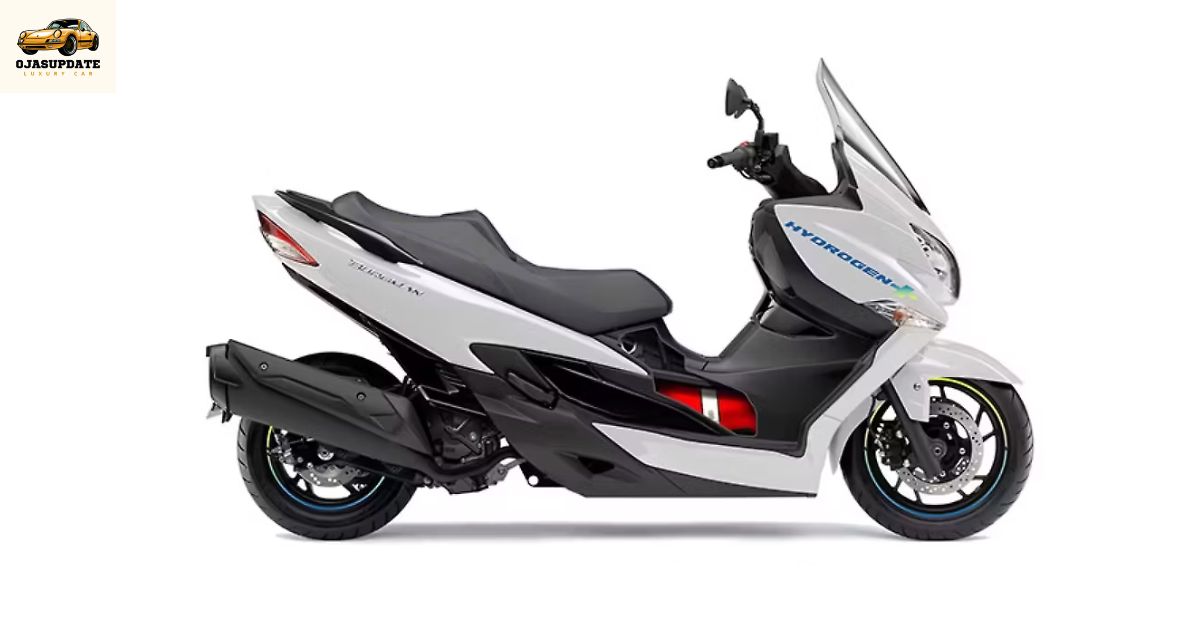
The Global automotive industry is undergoing its biggest transformation in over a century, with manufacturers exploring diverse pathways to achieve carbon neutrality. While electric vehicles dominate headlines, hydrogen technology is quietly emerging as a promising alternative. In this context, Suzuki’s Burgman Hydrogen Scooter stands out as a pioneering effort to bring hydrogen propulsion to mainstream two-wheelers.
🌍 Why Hydrogen?
Hydrogen-powered vehicles are not new, but their application in scooters is rare. Unlike fuel-cell vehicles that generate electricity from hydrogen, Suzuki’s Burgman uses a hydrogen combustion engine. This approach retains the mechanical feel and exhaust note of traditional engines while drastically reducing harmful emissions.
Key benefits of hydrogen propulsion:
- Cleaner emissions: Hydrogen combustion produces minimal pollutants compared to petrol.
- Quick refueling: Hydrogen tanks can be refilled in minutes, unlike long EV charging times.
- Familiar riding experience: Riders enjoy the sound and feel of an engine without the environmental guilt.
🚀 The Burgman Hydrogen Concept
Suzuki’s hydrogen scooter is based on the Burgman 400, a well-established maxi-scooter known for its comfort and practicality. The hydrogen-powered version retains the Burgman’s design DNA but integrates a new engine system designed to run on compressed hydrogen.
Highlights:
- Engine Type: Hydrogen combustion engine (not fuel cell).
- Platform: Burgman 400 maxi-scooter.
- Showcase: Cutaway model displayed at the 2025 Japan Mobility Show.
- Goal: Deliver a scooter that combines the joy of riding with eco-conscious technology.
🎨 Design and Features
While Suzuki has not revealed full specifications, the hydrogen Burgman is expected to retain the sleek, premium styling of the Burgman 400. Riders can expect:
- Comfortable seating for long commutes.
- Ample storage space, a hallmark of the Burgman series.
- Smooth performance, thanks to hydrogen’s clean combustion properties.
The cutaway model showcased at the Japan Mobility Show gave enthusiasts a glimpse of the hydrogen engine layout, sparking excitement about its potential.
⚡ Suzuki’s Eco-Friendly Vision
Suzuki has long experimented with alternative technologies, from hybrid cars to compact EVs. The Burgman Hydrogen Scooter represents the company’s commitment to diversifying clean mobility solutions. Rather than relying solely on electrification, Suzuki is exploring hydrogen as a complementary pathway to carbon neutrality.
This strategy acknowledges that no single technology can solve the climate challenge. By offering hydrogen-powered scooters, Suzuki provides riders with more choices for sustainable transport.
📈 Market Potential
Hydrogen scooters could find strong demand in regions where:
- Hydrogen refueling infrastructure is expanding (Japan, parts of Europe).
- Urban pollution concerns drive adoption of cleaner vehicles.
- Riders seek alternatives to electric scooters with long charging times.
India, where Suzuki has a strong presence, could eventually benefit if hydrogen infrastructure develops. For now, the Burgman Hydrogen remains a concept, but its unveiling signals Suzuki’s readiness to adapt to future markets.
🌱 Challenges Ahead
While promising, hydrogen scooters face hurdles:
- Infrastructure: Limited hydrogen refueling stations globally.
- Cost: Hydrogen production and storage remain expensive.
- Safety: Hydrogen requires specialized handling due to its flammability.
Suzuki’s Burgman Hydrogen is therefore more of a technology demonstrator than a mass-market product—at least for now.
🏍️ Final Thoughts
The Suzuki Burgman Hydrogen Scooter is a bold experiment that blends tradition with innovation. By choosing hydrogen combustion over fuel cells, Suzuki preserves the visceral joy of riding while drastically cutting emissions. Though challenges remain, the Burgman Hydrogen represents a new frontier in eco-friendly two-wheelers.
As hydrogen infrastructure expands, scooters like the Burgman could become a practical alternative to petrol and electric models. For now, Suzuki’s unveiling at the Japan Mobility Show is a powerful statement: the future of mobility will be diverse, and hydrogen has a role to play.
About the Author