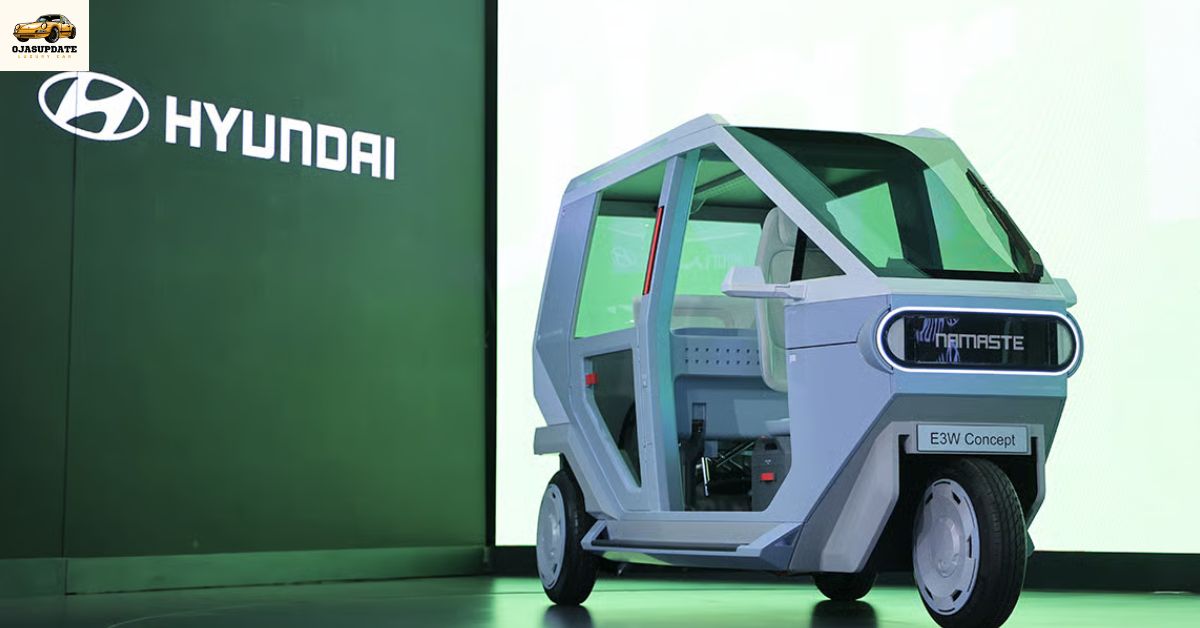
Hyundai’s E3W concept is a bold step into the future of compact electric mobility, designed specifically for crowded urban environments like India’s bustling cities. Developed in partnership with TVS Motor Company, the E3W is a three-wheeled electric tuk-tuk that blends practicality, sustainability, and innovation.
The Rise of Micro-Mobility 🚙⚡
Urban centers across the world are facing challenges: traffic congestion, pollution, and limited space. Traditional cars often struggle in these environments, making smaller, more efficient vehicles increasingly attractive. Hyundai’s E3W concept addresses this need by offering a compact, eco-friendly solution tailored for last-mile connectivity.
The E3W is not just another electric vehicle—it’s a reimagining of the tuk-tuk, a cultural icon in India and Southeast Asia. By electrifying this familiar form, Hyundai is tapping into a massive market while promoting cleaner transportation.
Design and Innovation
The E3W is a three-wheeled electric tuk-tuk, designed to navigate tight city streets with ease. Its compact dimensions make it ideal for dense urban areas where maneuverability is key. Hyundai has emphasized practicality, ensuring the vehicle can handle everyday commuting, short-distance travel, and even small-scale goods delivery.
Key design highlights:
- Adjustable body structure for different use cases (passenger or cargo).
- Lightweight construction to maximize efficiency.
- Minimal footprint, allowing easy parking and navigation in congested areas.
The collaboration with TVS Motor Company ensures that the E3W benefits from local expertise in two- and three-wheeler design, making it well-suited for Indian roads and consumer expectations.
Performance and Sustainability
While Hyundai has not yet released full technical specifications, the E3W is expected to feature:
- Electric drivetrain with zero tailpipe emissions.
- Battery optimized for short urban trips, balancing cost and efficiency.
- Low operating costs, making it attractive for fleet operators and small businesses.
By focusing on sustainability, Hyundai is positioning the E3W as a solution to urban pollution. Electric tuk-tuks can significantly reduce emissions compared to traditional petrol-powered models, contributing to cleaner air in cities.
Market Potential in India 🇮🇳
India is the perfect launchpad for the E3W. With millions of tuk-tuks already in operation, electrification offers a massive opportunity. The E3W could revolutionize urban transport by:
- Providing affordable mobility for passengers.
- Supporting last-mile delivery services, especially in e-commerce.
- Reducing dependence on fossil fuels.
Hyundai plans to produce the E3W in India, ensuring competitive pricing and accessibility. This aligns with India’s push toward electric mobility and government incentives for EV adoption.
Comparison: E3W vs. E4W
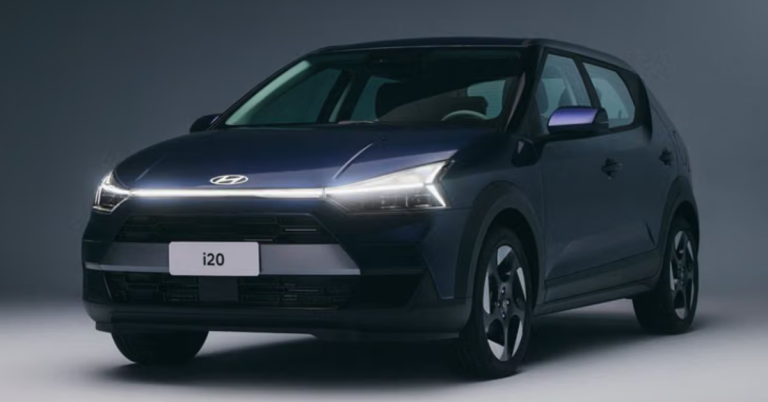
Hyundai also unveiled the E4W concept, a compact four-wheeled EV aimed at global markets. While the E4W is under review for international expansion, the E3W is firmly focused on India.
| Feature | Hyundai E3W | Hyundai E4W |
|---|---|---|
| Wheels | 3 (tuk-tuk style) | 4 (mini car) |
| Target Market | India, urban tuk-tuk replacement | Global compact EV segment |
| Use Case | Passenger/cargo, last-mile mobility | Personal commuting, city driving |
| Production | Planned in India | Under evaluation |
This dual approach shows Hyundai’s strategy: local solutions for local problems, while also exploring global opportunities.
Challenges Ahead
Despite its promise, the E3W faces hurdles:
- Infrastructure: India’s EV charging network is still developing.
- Consumer adoption: Convincing traditional tuk-tuk drivers to switch to electric may take time.
- Cost vs. durability: Ensuring affordability while maintaining reliability is critical.
Hyundai’s partnership with TVS could help overcome these challenges, leveraging local knowledge and manufacturing capabilities.
The Future of Urban Mobility
The Hyundai E3W concept represents more than just a new vehicle—it’s a vision of how cities can evolve. By prioritizing compact, efficient, and sustainable transport, Hyundai is addressing the realities of modern urban life.
If successful, the E3W could inspire similar innovations worldwide, reshaping how we think about mobility in crowded cities. It’s not about building bigger, faster cars—it’s about building smarter ones.
Conclusion
The Hyundai E3W concept is a game-changer for urban mobility, especially in India. By electrifying the tuk-tuk, Hyundai is offering a sustainable, practical, and culturally relevant solution to city transport challenges. While hurdles remain, the E3W’s potential impact is enormous—reducing emissions, easing congestion, and redefining last-mile connectivity.
As the automotive industry shifts toward electrification, the E3W stands out as a symbol of innovation tailored to real-world needs. It may be small, but its vision is big: a cleaner, smarter future for urban transport.
About the Author