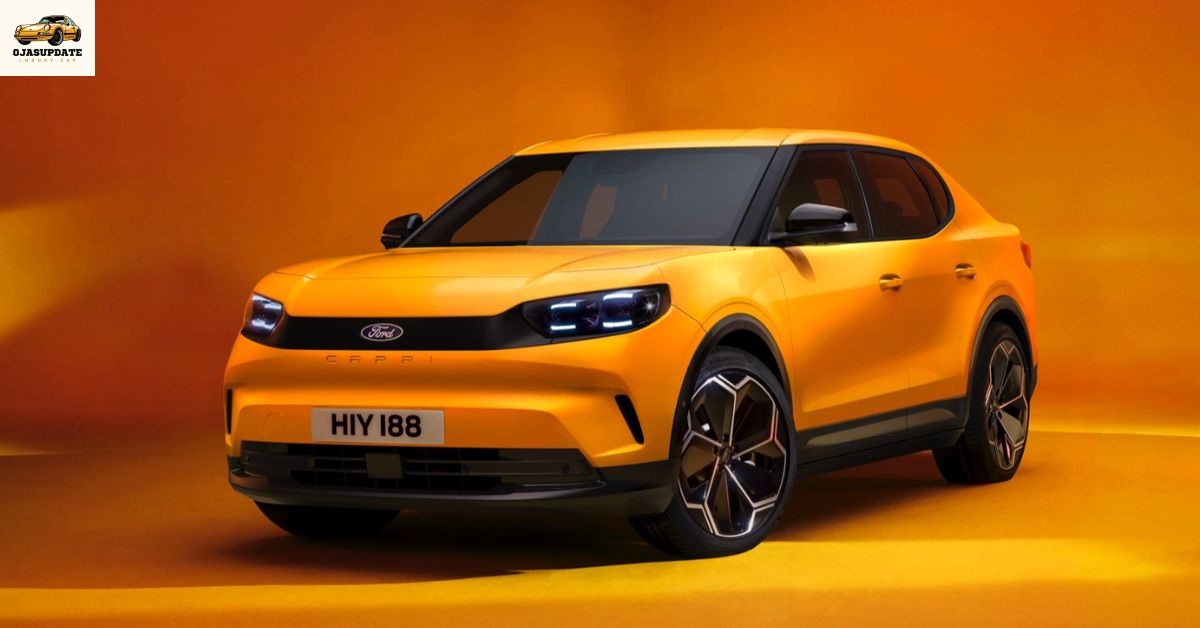
When Ford unveiled the Capri in 1969, it wasn’t just launching another car—it was introducing a cultural icon. Marketed as “The Car You Always Promised Yourself,” the Capri was Ford’s answer to the American Mustang, tailored for European tastes. Sleek, sporty, and affordable, it quickly became a symbol of aspiration and individuality across the continent. Today, decades after production ended, the Capri still holds a special place in the hearts of enthusiasts and collectors.
🚗 Origins of the Capri
The Ford Mustang had taken America by storm in the mid-1960s, combining sporty looks with mass-market affordability. Ford wanted to replicate that success in Europe, where smaller cars and tighter roads demanded a different approach. The result was the Capri, designed in the UK and Germany, and built to deliver Mustang-inspired thrills in a more compact package.
Launched at the Brussels Motor Show in 1969, the Capri immediately captured attention. Its long hood, short rear deck, and fastback styling echoed the Mustang, but its size and engine options made it practical for European drivers.
⚙️ Engine Options and Performance
One of the Capri’s strengths was its versatility. Buyers could choose from a wide range of engines, from modest four-cylinder units to powerful V6s. This meant the Capri appealed to a broad audience: young drivers seeking style on a budget, families wanting a sporty but usable car, and enthusiasts craving performance.
Highlights included:
- 1.3L and 1.6L four-cylinder engines for entry-level affordability.
- 2.0L and 3.0L V6 engines for serious performance, especially in the Capri 3000 GT.
- Later models introduced fuel injection and turbocharged variants, keeping the Capri competitive through the 1970s and 1980s.
The Capri wasn’t just about straight-line speed. Its rear-wheel-drive layout and balanced handling made it fun to drive, whether on winding European roads or racing circuits.
🎨 Styling and Design
The Capri’s design was one of its biggest selling points. With its long, sweeping lines, quad headlights, and sporty stance, it looked far more expensive than it was. Ford offered a wide range of trims and customization options, allowing buyers to personalize their cars with vinyl roofs, alloy wheels, and bold paint schemes.
Inside, the Capri blended practicality with flair. Bucket seats, sporty dashboards, and optional luxury touches gave it an upscale feel without losing affordability.
🏁 Motorsport Legacy
The Capri wasn’t just a road car—it was a racing success. It competed in touring car championships across Europe, often going head-to-head with BMWs and other performance icons. The Capri RS models, particularly the RS2600 and RS3100, became legends on the track.
Ford’s investment in motorsport helped cement the Capri’s reputation as more than just a stylish coupe. It was a genuine performance machine, capable of winning races and thrilling drivers.
🌍 Cultural Impact
The Capri quickly became a cultural phenomenon. In the UK, it was seen as the car of choice for young professionals and aspiring trendsetters. It appeared in films, TV shows, and even police fleets. In Germany, it was embraced as a stylish alternative to more conservative sedans.
Nicknamed the “European Mustang,” the Capri symbolized freedom, individuality, and ambition. It was aspirational yet attainable, making it one of the most beloved cars of its era.
🔄 Evolution Through the Generations
The Capri went through three major generations:
- Mk I (1969–1974): The original, with classic styling and a wide range of engines.
- Mk II (1974–1978): More practical, with a hatchback design and improved comfort.
- Mk III (1978–1986): Sharper styling, better aerodynamics, and continued performance focus.
Each generation refined the formula, keeping the Capri relevant as tastes and technology evolved. By the mid-1980s, however, hot hatchbacks like the Volkswagen Golf GTI began to dominate the market, and the Capri’s appeal waned. Production ended in 1986, marking the end of an era.
🔮 Legacy and Collectibility
Today, the Ford Capri is a cherished classic. Enthusiasts prize well-preserved examples, especially high-performance models like the 3.0L V6 and RS variants. Clubs and communities across Europe keep the Capri spirit alive, organizing events, restorations, and rallies.
Its legacy is clear: the Capri proved that affordable performance cars could be stylish, versatile, and culturally significant. It bridged the gap between everyday practicality and aspirational motoring, leaving a lasting mark on automotive history.
Final Thoughts
The Ford Capri wasn’t just a car—it was a statement. It embodied the optimism of its era, offering drivers a taste of performance and style without breaking the bank. From its racing triumphs to its cultural presence, the Capri remains one of Ford’s most iconic creations.
Even today, when spotted at a classic car meet or cruising down a European road, the Capri turns heads. It’s a reminder of a time when cars were not just machines, but symbols of freedom, ambition, and individuality.
About the Author